
Long before Jolie (Cain) Pelds (BA '93, MAT '95) was helping Iowa families make sense of artificial intelligence, she was a University of Iowa biology student looking for a way to share her love of science.
Pelds knew she wanted to study biology at Iowa. Becoming an educator came into focus later, when she entered the college’s Teacher Education Program to obtain her Master of Arts in Teaching Science Education.
She arrived with a passion for experiencing science. Her education at Iowa taught her how to create those experiences for others. The college’s science education program showed Pelds that teaching was not simply about facts, graphs, and experiments. It was about asking meaningful questions and putting materials in front of students that encouraged them “to be curious and want to play and want to learn more.”
“I tell people all the time that I think I would have been a good teacher, but I think I’m a better teacher because of my experience at the University of Iowa and in the college, especially the science education department,” Pelds says. “It's lasted through many facets. I've taught in public school. I've taught at community college. I've homeschooled my kids. I teach informally here, and all those things I learned apply to all of those different situations of education.”
Today, as the Director of STEM Innovation at the Science Center of Iowa (SCI) in Des Moines, Iowa, she still draws on the same principles: curiosity, exploration and helping people investigate unfamiliar ideas for themselves.
Following curiosity into a new frontier
When generative AI became widely available, SCI staff first spent close to a year studying what AI could and could not do, experimenting with tools and building their own understanding.
“We felt like we had to become better experts in it first before we could begin talking to the community about it,” Pelds says.
Although AI can appear highly technical, Pelds’ and her colleagues’ approach is intentionally hands-on. In one activity, participants play an off-the-shelf board game called Things and Rings, sorting objects into overlapping circles. Facilitators use the game to explain how AI recognizes patterns and sometimes produces a “hallucination,” or an inaccurate answer. The best part — you don’t need to know anything about AI to play this game.
That is part of its value. The activity makes a complicated subject feel obtainable, and teachers and youth leaders can recreate it without specialized equipment.
The SCI uses a similarly approachable method with some of its youngest learners.
Preschoolers draw happy and sad faces and examine the features that make each expression recognizable. They then smile and frown for a computer, helping to train a simple model to identify the expressions.
For children who have always known phones that unlock by recognizing a face and devices that answer spoken questions, the technology can seem almost magical. Pelds wants them to understand that people taught those systems how to detect patterns.
“It’s not magic,” she says. “It’s because we as humans taught that machine how to do that.”
Once children understand this, Pelds says, they feel more empowered and less mystified by the technology around them.
Helping families join the conversation
Adults need that confidence, too.
During an AI-focused homeschool series, students participated in activities while their parents gathered in a neighboring room. Pelds expected that some parents might resist the subject. Instead, many expressed relief that someone was helping them understand it.
They did not know which tools were appropriate, how to discuss AI with their children, or how it could fit into learning at home. SCI staff used role-playing, practical examples, and lesson-planning activities to help them navigate those questions.
Many parents, Pelds says, initially felt inadequate because the technology was advancing faster than their understanding of it.
“Sometimes the parents are the lost piece of this puzzle,” she says. “We’re putting focus in industry, we’re putting focus on schools, we’re putting focus on higher ed, but who’s talking to the parents?”
The experience illustrates one of Pelds’ central beliefs: AI education is not about persuading everyone to embrace the technology. It is about giving people enough understanding to make thoughtful choices.
That approach also guided the first Iowa AI Convening in April 2026, which brought together representatives from education, industry and the community — groups that often discuss AI separately.
Participants shared an experience in the SCI’s AI exhibit and then put their computers away. Using Post-it notes and chart paper, teachers heard what business leaders were trying to solve. Business leaders heard the concerns educators were encountering in schools. Community members added questions about how AI was affecting everyday life.
The intentionally analog format encouraged participants to listen to perspectives beyond their own and consider both the possibilities and the risks of AI.
“Skeptical, but excited”
The concerns are familiar: Will students stop thinking for themselves? Can AI be trusted? Will teachers be replaced? And how can anyone keep up?
Pelds does not believe educators should minimize those worries, but she also does not want fear to stop the learning.
“You should be skeptical, but you should be excited, too. Those things can exist in the same world.”
-Jolie Pelds
College experts are wrestling with that balance from different perspectives.
Mark McDermott, associate dean for undergraduate education and educator preparation, sees AI as an opportunity to reconsider long-standing teaching practices, especially assessment. If students can put questions into an AI platform and receive the correct answers, he says, educators should ask whether the assessment was measuring understanding in the first place.
“If they can use AI and get all the correct answers to the test, then how is that test really telling you what the student understands?” McDermott says.
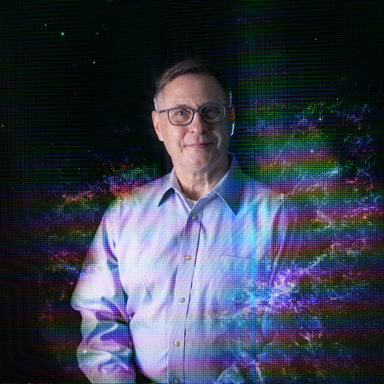
Edward Wolfe, inaugural Iowa Testing Programs Faculty Chair, approaches the question from educational measurement. AI can create efficiencies in developing test questions and scoring responses, he says, but its value is not in removing people from the process.
“It’s freeing up human judgment to focus on things that might matter more than we would have had the time or effort to focus on previously,” Wolfe says.
Wolfe assumes students will use AI and believes assessments should show what they add beyond it, such as how they refined a prompt or evaluated a result.
The goal is not to let AI complete the learning. It is to design learning that still requires expertise, judgment and reflection.
Keeping people in the process
Dora Kourkoulou, clinical assistant professor of elementary education and educational technology, understands why future teachers may hesitate. She describes herself as “a heavy user, but a very skeptical one.”
Her background in technology grew from an interest in play, video games, and creativity. She sees AI’s potential while also recognizing that it can hinder learning.
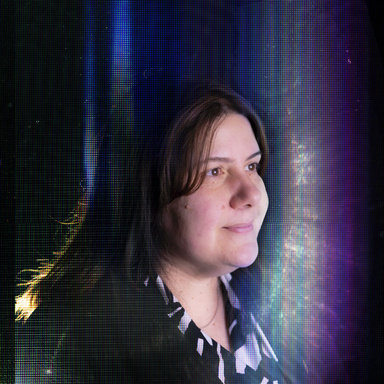
For Kourkoulou, the central standard remains simple: “Good teaching is good teaching. It doesn’t matter if it happens with AI or without AI.”
In her courses, Kourkoulou has used AI to help transform her notes and rubrics into more extensive, personalized feedback. She is transparent about AI usage and retains responsibility for reviewing all materials students receive.
The experience has shown her that students’ greatest concern is not always whether a machine helped compose the feedback. They want to know their instructor has carefully considered their work and recognizes their emerging professional identities.
“What students want is meaningful engagement with their work and guidance as beginning teachers,” she says, emphasizing transparency as an element of sound pedagogy with or without AI.
Supporting – not replacing – people
The importance of human connection becomes even more pronounced when AI enters conversations about mental health.
Isak Kim, assistant professor of clinical mental health counseling, studies how AI-assisted systems may support youth mental health services. He is also a parent who understands why families are uneasy about young people using chatbots for information, companionship, or emotional support.
Questions about privacy, personal information, unsupervised use, and ethical boundaries cannot be ignored. Schools and mental health professionals should not adopt a technology simply because it is available.
When designed and used responsibly, however, Kim believes AI-assisted resources could help provide basic mental health information, recognize patterns, and lower some of the initial barriers to seeking help. That potential may be particularly meaningful in rural communities facing shortages of mental health professionals.
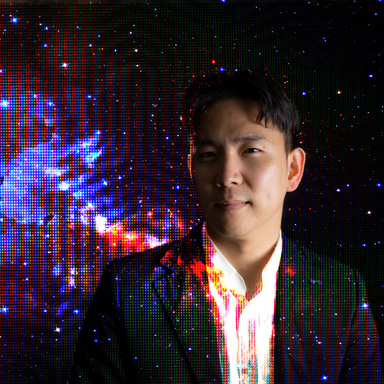
In Kim’s work, AI is not intended to diagnose a student or make final decisions. It may assist with screening or help professionals notice patterns in behavior, mood, or communication, but interpretation must remain with trained people.
Kim describes counselors as witnesses to a young person’s growth, recovery, and resilience. Technology might help a counselor identify something important, but it cannot replace the relationship in which a student feels known and supported. “Being seen and heard by another person can give that process a sense of meaning and relational accountability that is difficult to fully reproduce with technology only,” Kim says.
McDermott draws a similar boundary in teaching. AI-generated lessons, assessments, or feedback still require a person to evaluate them for accuracy, bias, context, and appropriateness.
Most importantly, efficiency cannot outweigh connection.
“Relationships are hugely critical in teaching,” he says. “These tools should not take away the responsibility of the human in the classroom to authentically work to form a human-connected relationship with the students.”
Staying human
Pelds describes that principle as keeping the “human in the loop.”
A tool can suggest ideas or detect patterns, but people bring judgment, context, emotion, values, and purpose.
“It becomes an assistant to me,” Pelds says. “It helps me, but it’s still me.”
Wolfe offers his students a similar rule: Their job when using AI is to be “the interrogator.”
“You need to guide it. You need to understand it. You need to scrutinize its results,” he says.
Pelds encourages educators to model that process openly by sharing when they used AI, what it contributed, and what they rejected. Students can share their prompts and revisions, shifting the emphasis to whether AI strengthened or replaced their thinking.
That process resembles the science learning Pelds first encountered at Iowa: questioning information, testing ideas, noticing patterns, and making decisions based on evidence.
Prepared for change
No course or policy can prepare educators for every version of AI still to come. Pelds’ advice to future teachers is to prepare not for one particular tool, but for change itself.
“How do I continue to be a learner of this new thing, and how do I prepare my students to be in that world?” Pelds says.
Wolfe is reluctant to predict what that world will look like even five years from now. What educators can preserve, he says, is “our abilities as humans to think critically about what it is we’re doing and the implications.”
Kourkoulou sees AI accelerating questions educators have always needed to ask about trust, learning, and pedagogy.
“These are questions that did not begin with AI,” she says. The technology is simply making them impossible to ignore.
For Pelds, the foundation came years before generative AI: a love of biology, a desire to teach, and an Iowa education that showed her how curiosity could become a career.
The technology has changed, but her purpose has not — help people understand their world, give them room to investigate it, and prepare them to make their own informed choices.
AI can generate an answer in seconds. Education’s greater responsibility is helping learners decide whether it is a good one — and reminding them that they still have the power to choose what happens next.
Read more from the 2025-26 Iowa Education Annual Report Magazine.