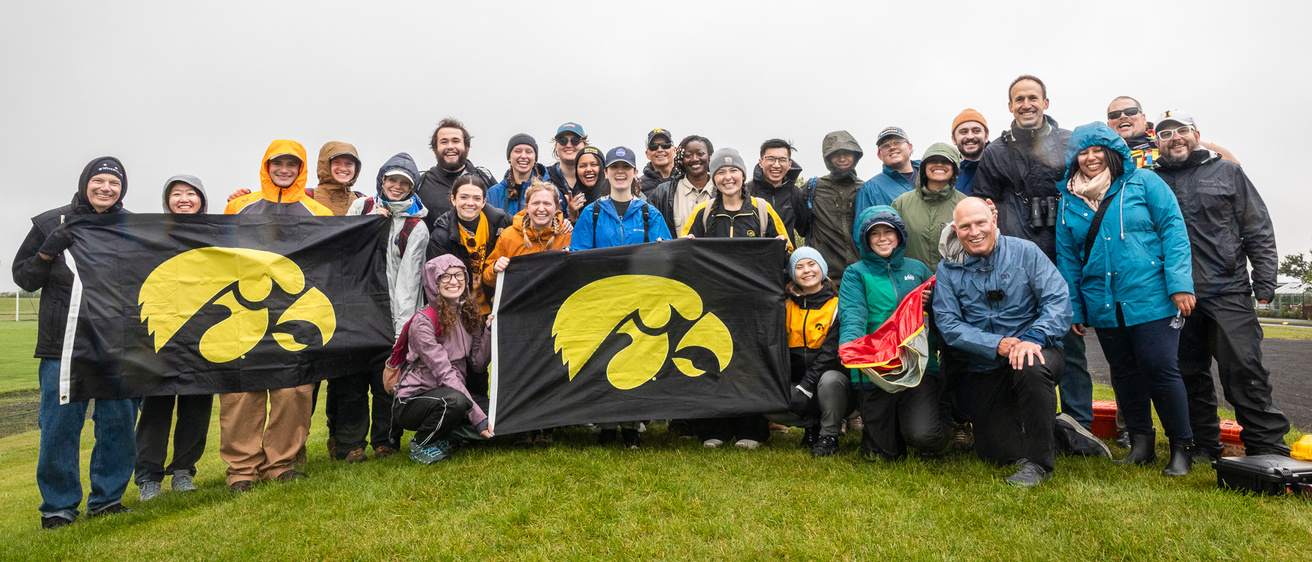
Some summers are more eventful and memorable than others. For a multidisciplinary team of University of Iowa students and faculty from the colleges of Education, Liberal Arts and Sciences, and Engineering, the summer of 2026 was one that won’t be forgotten anytime soon.
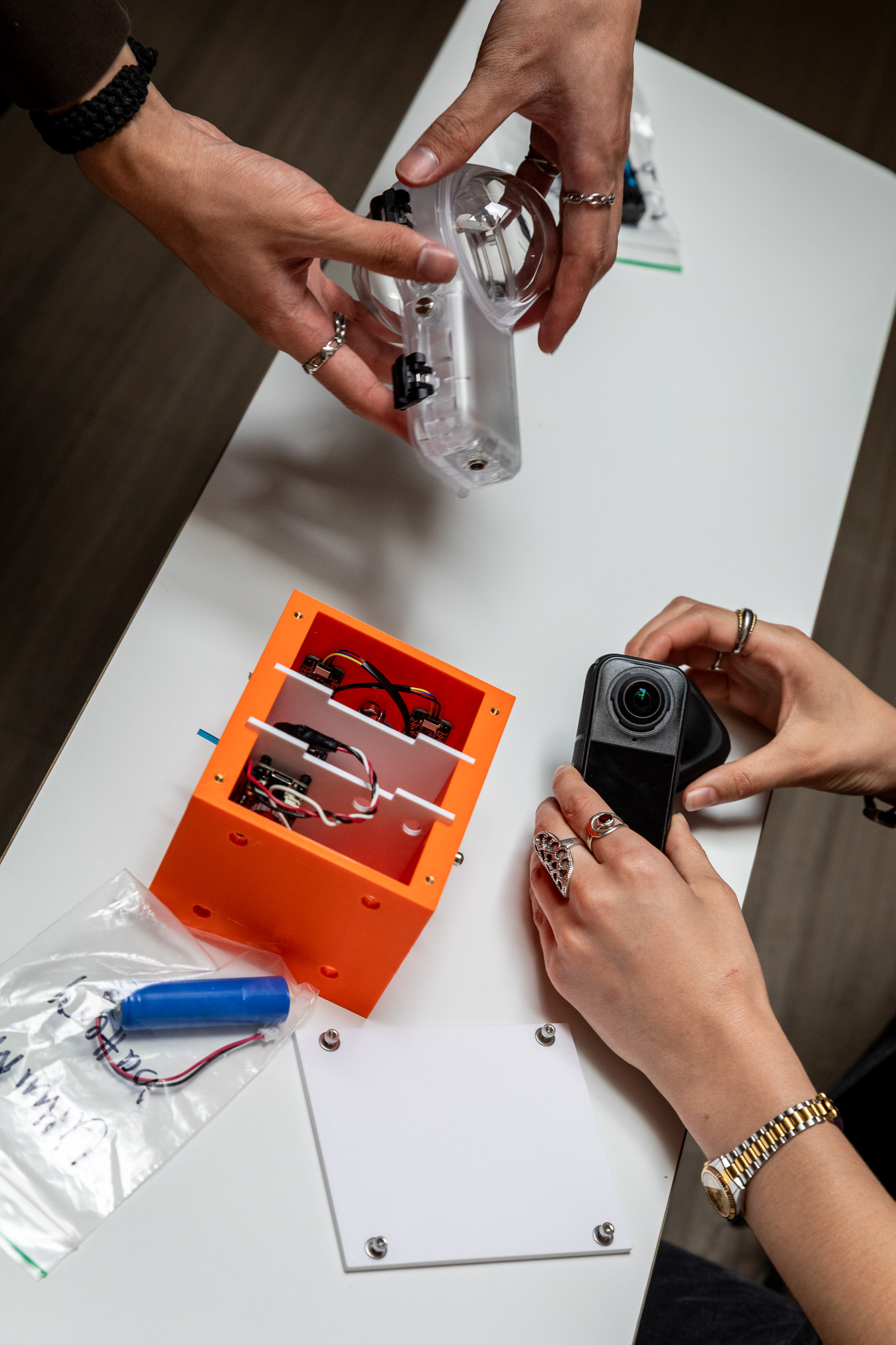
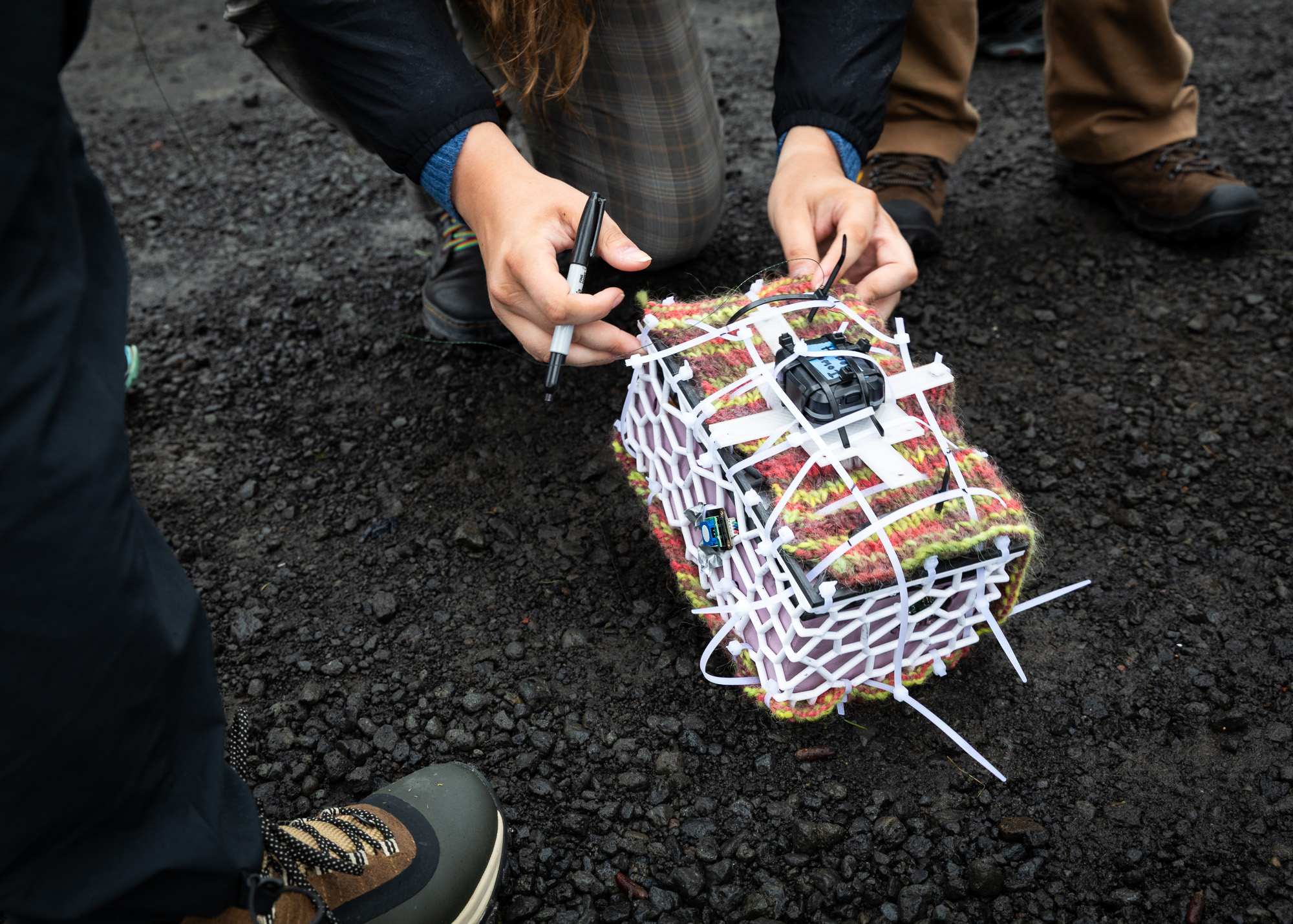
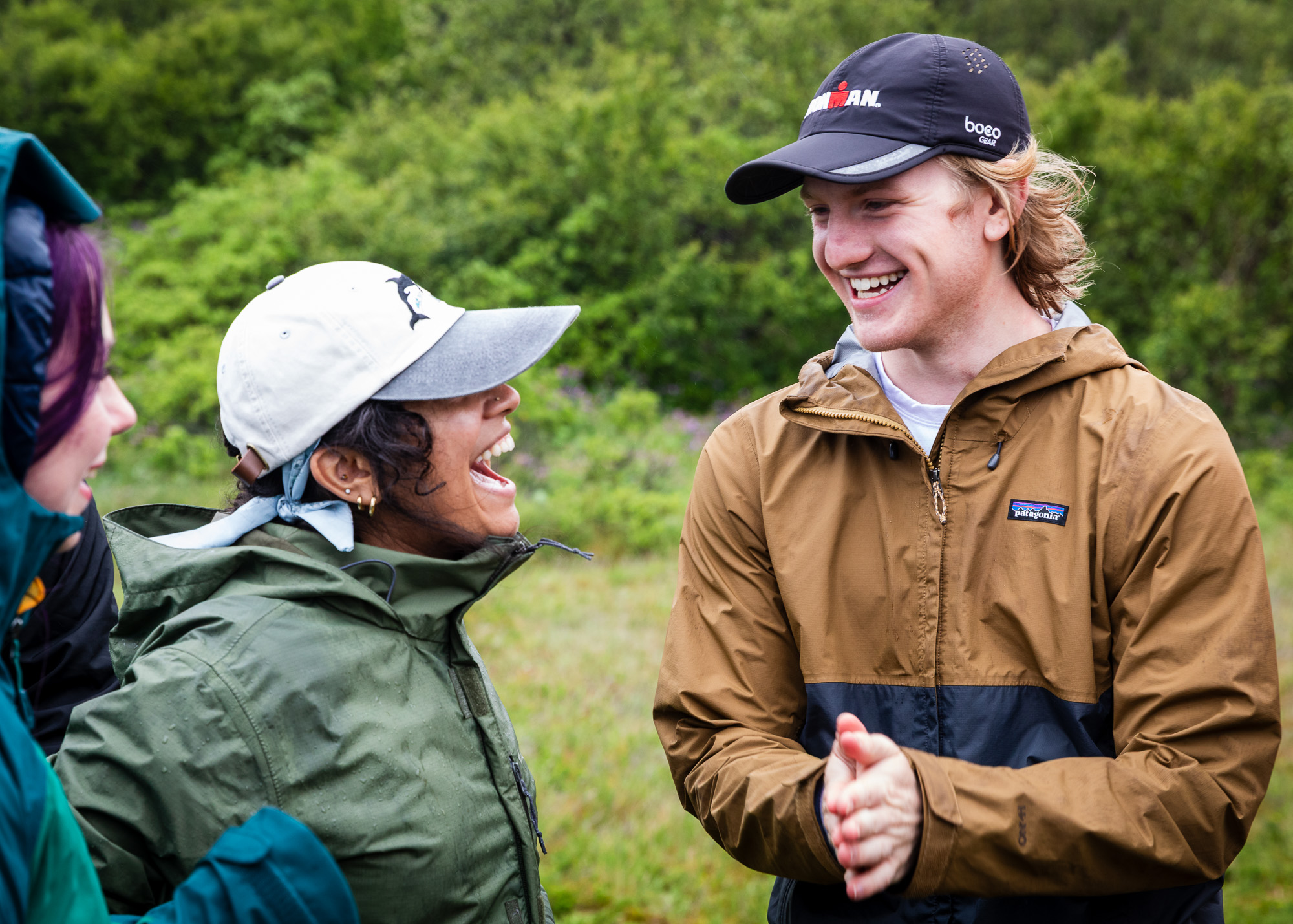
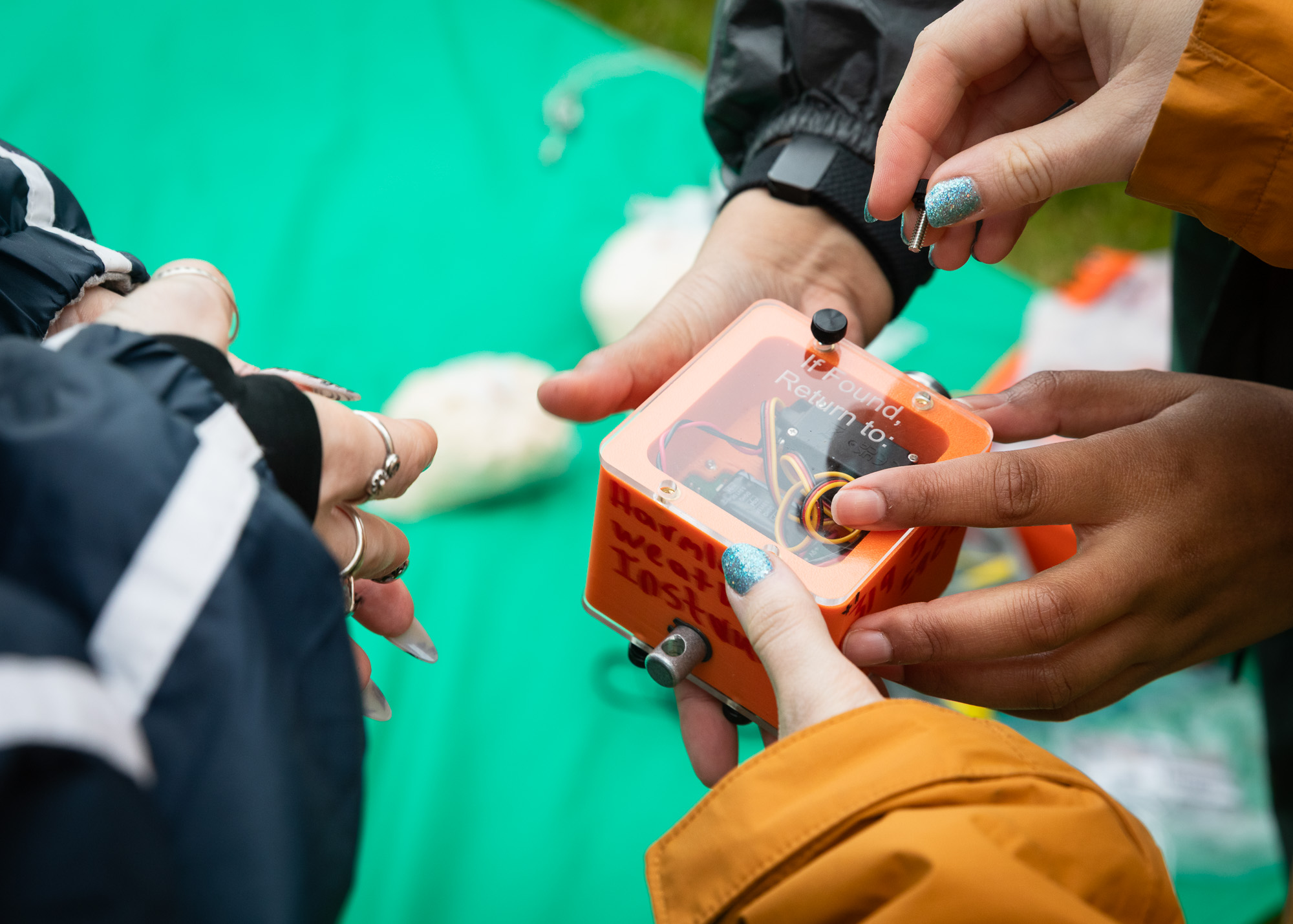
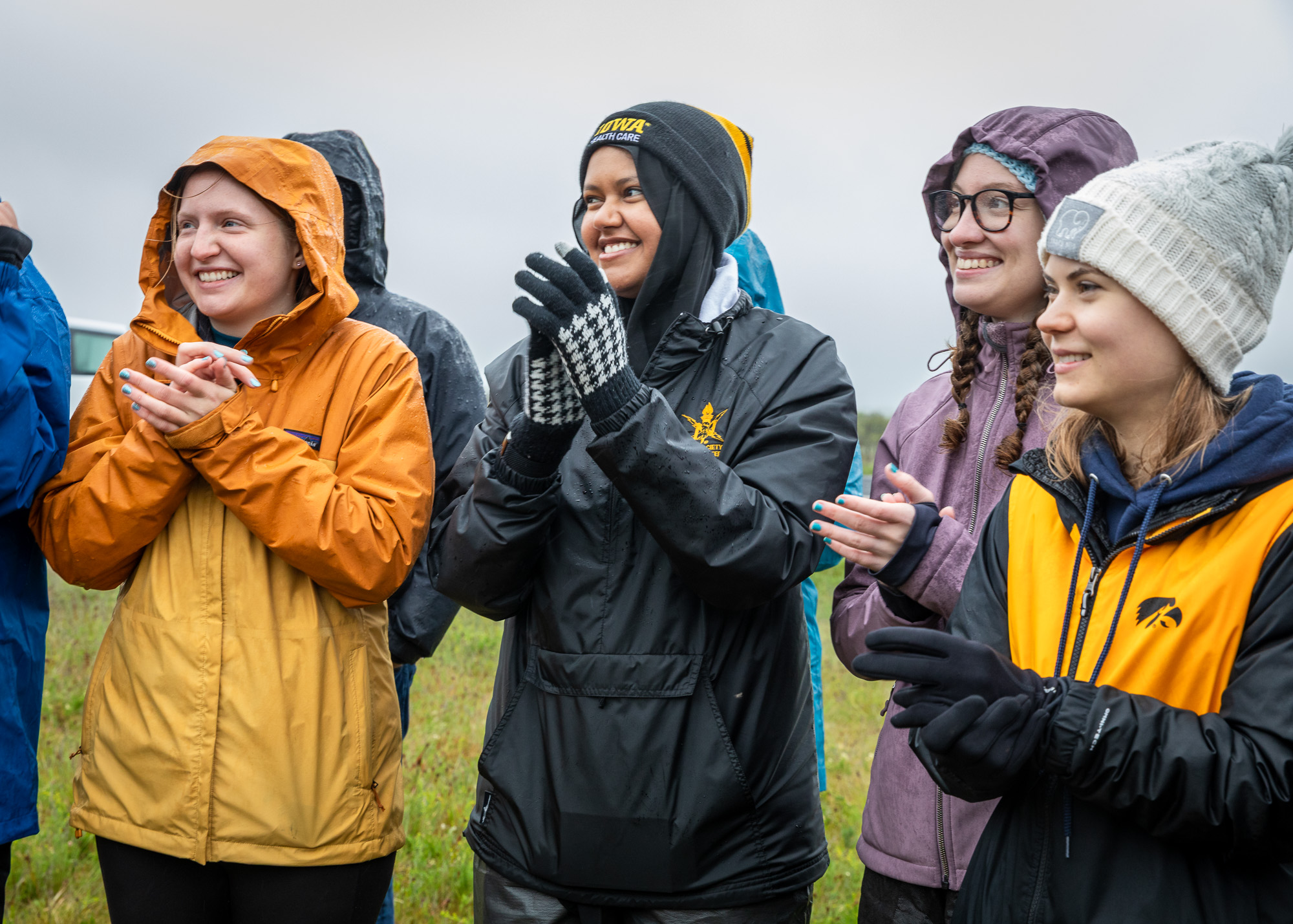
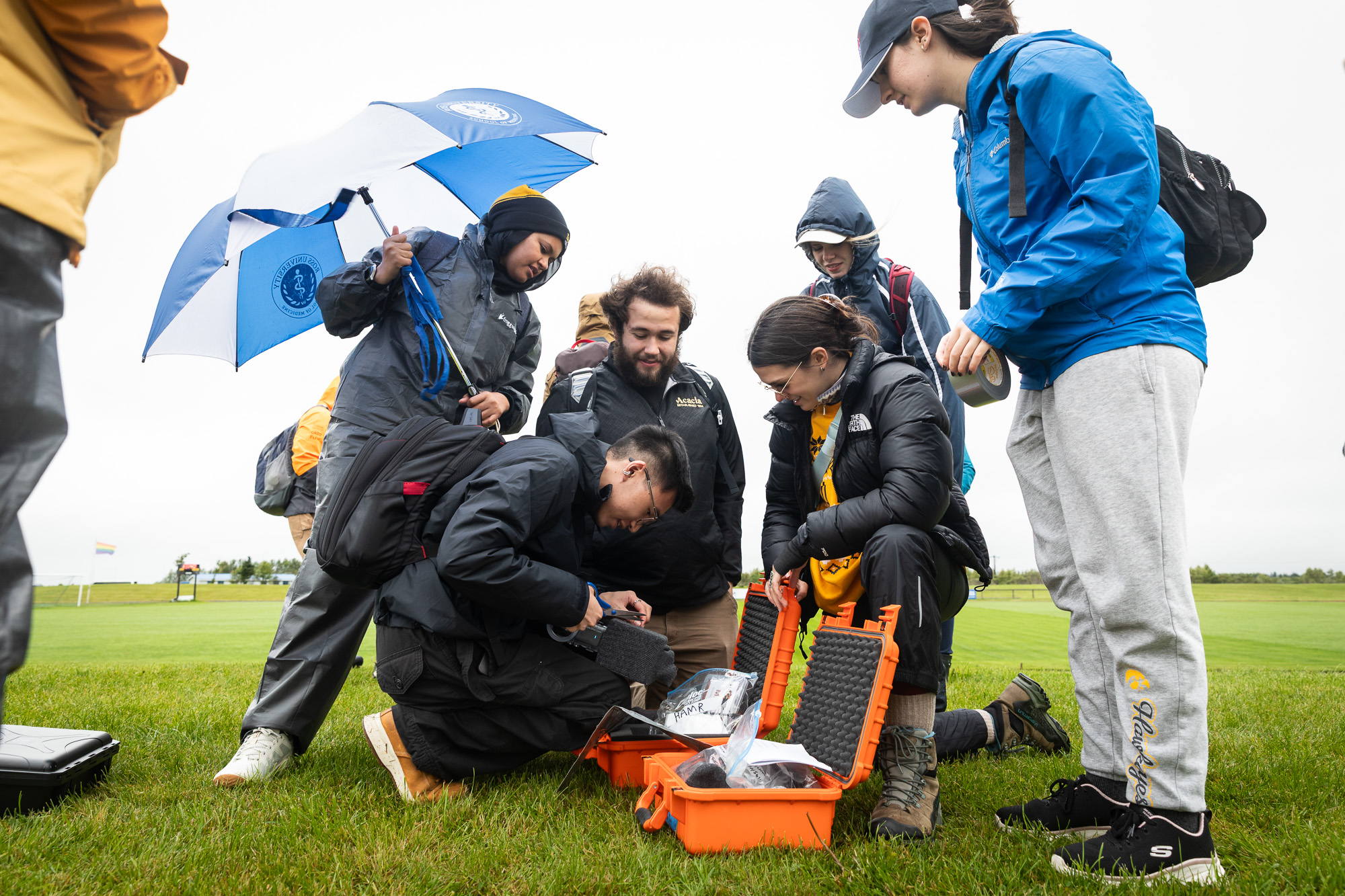
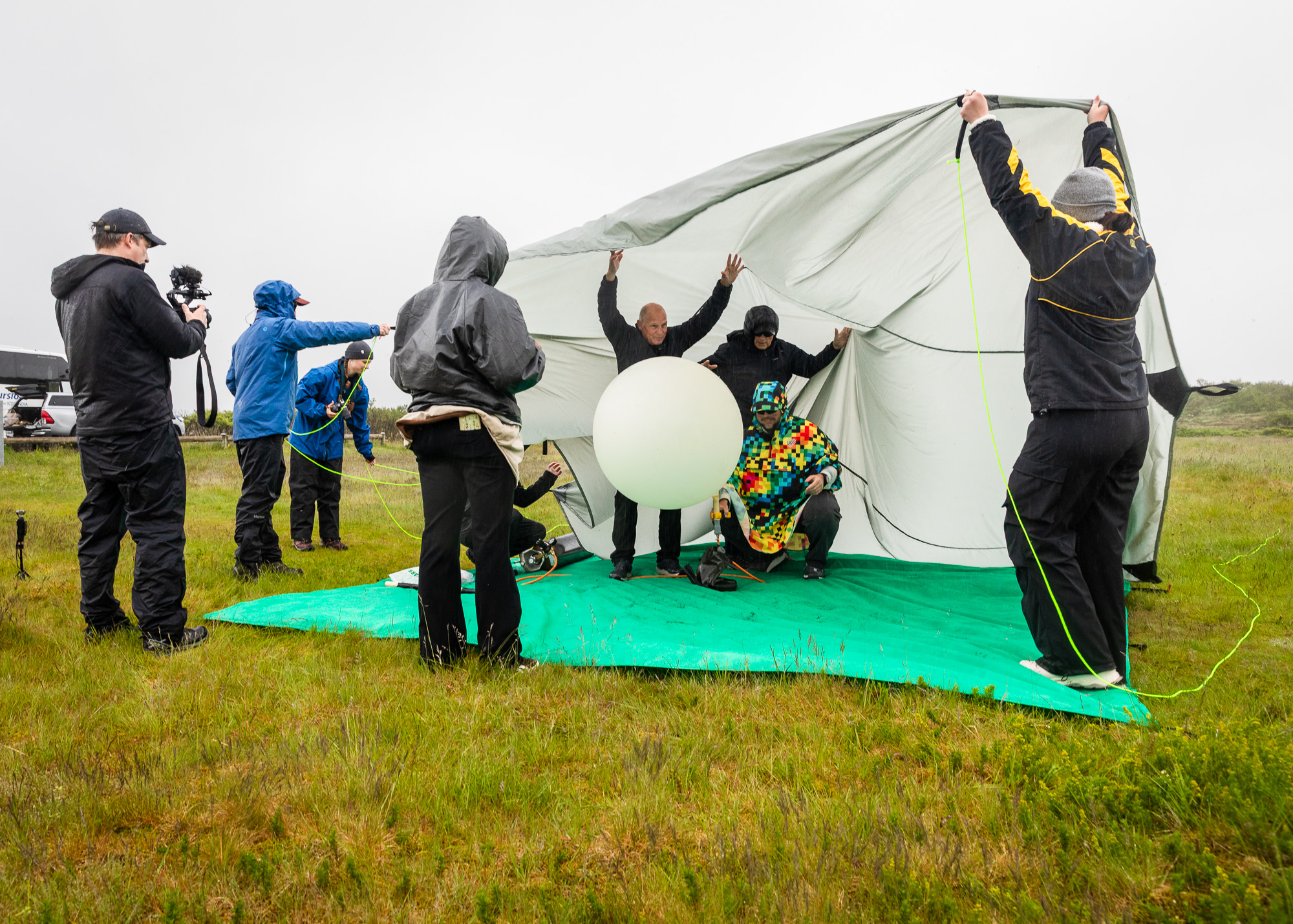
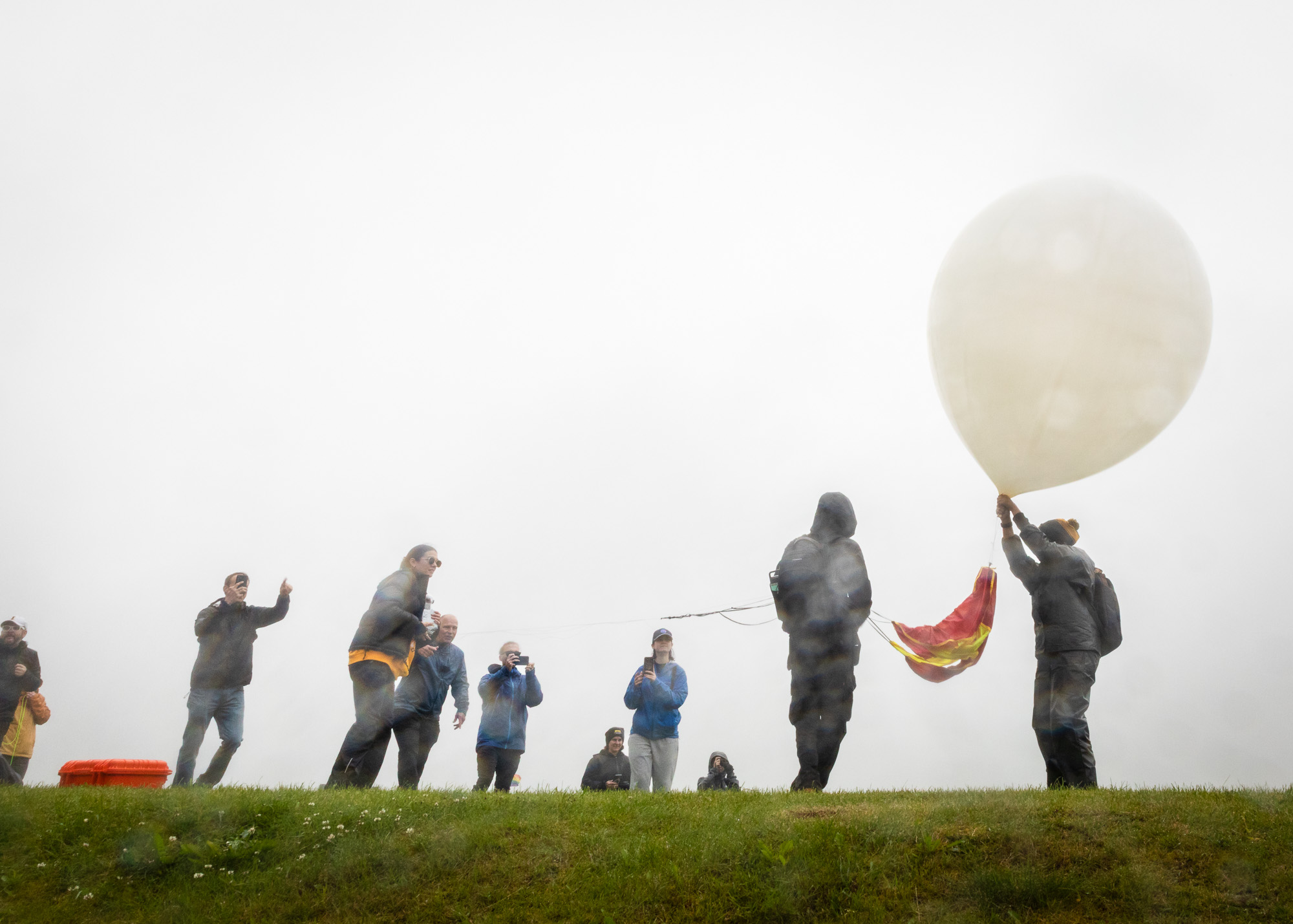
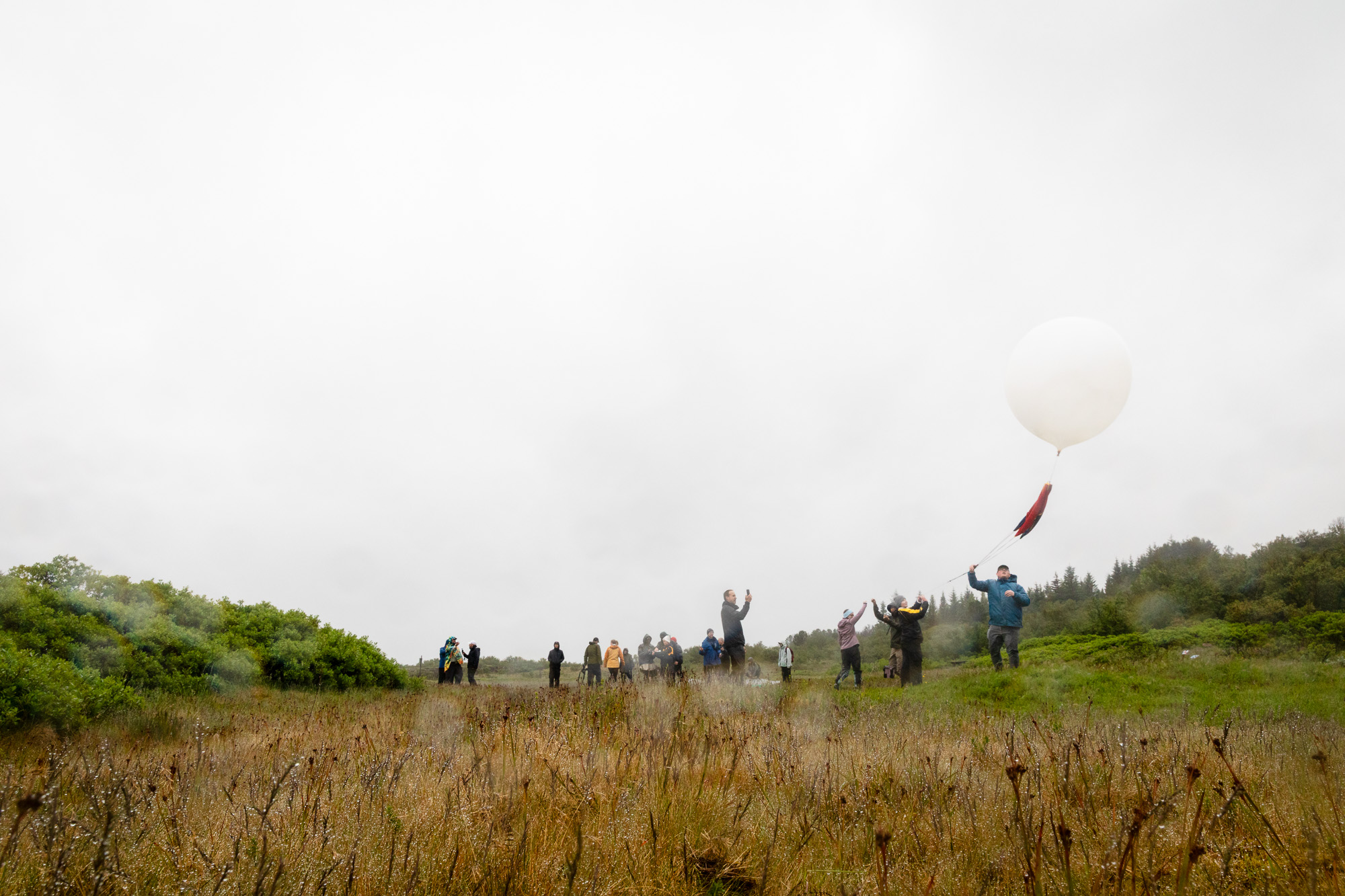
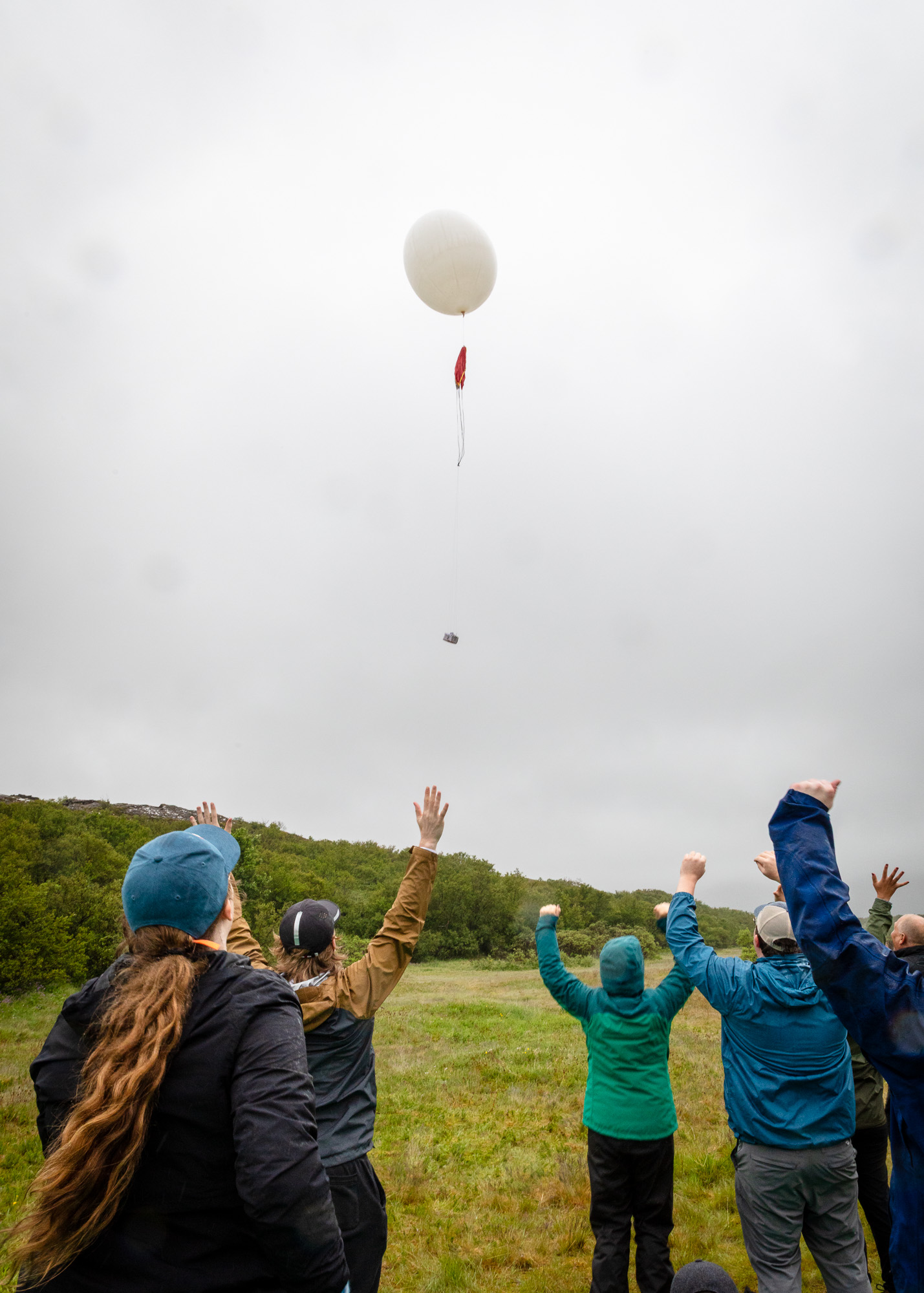
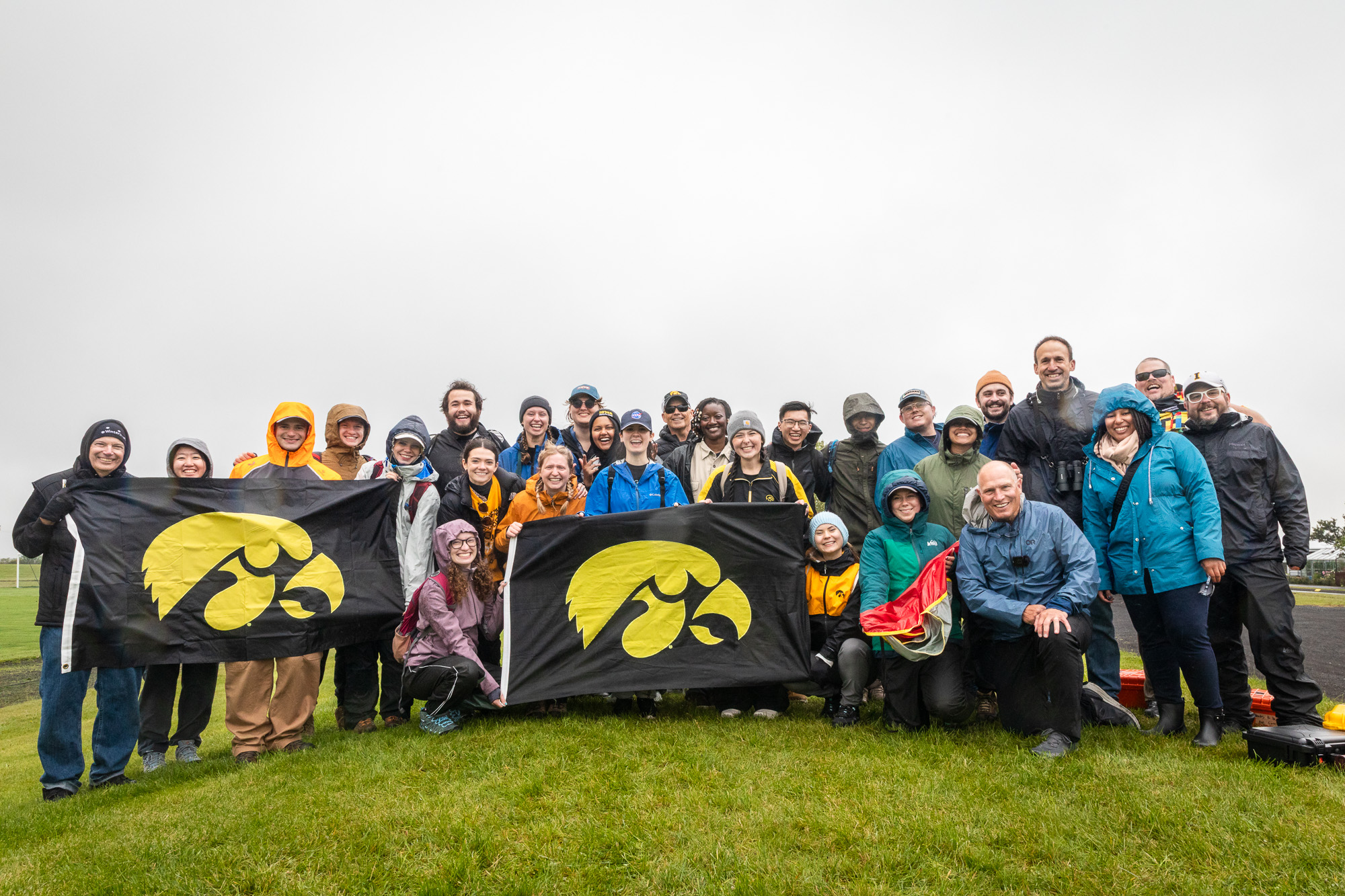
Twenty undergraduate and graduate students, as well as 10 faculty members, recently traveled more than 3,000 miles to Reykjavik, Iceland, as part of an interdisciplinary expedition that centered on designing, building, and launching near-space research balloons.
What began as a spring 2026 course titled “The Iowa Idea at Great Heights”—which was taught by an instructional team of faculty from all three colleges and anchored by Steve McGuire of the School of Art, Art History and Design—the initiative culminated with the launch of payloads during the August 12 solar eclipse in Iceland’s Westfjords.
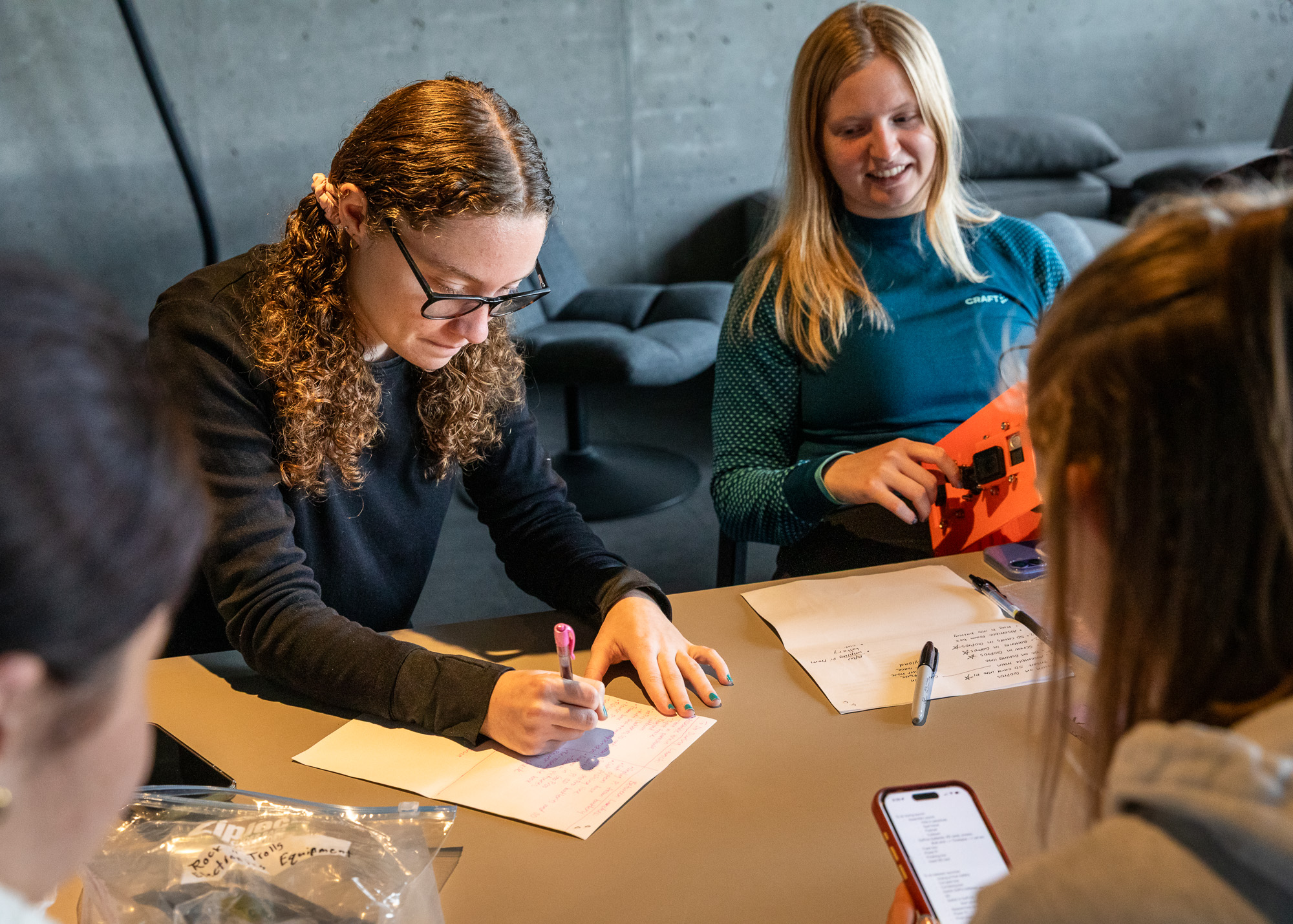
The course was designed to promote cross-disciplinary teamwork, problem solving, and real-time group decision making under time and cost constraints—simulating real-world challenges students will face in their careers.
Kay Ramey, an assistant professor of learning sciences and educational psychology in the College of Education, who is studying the course as a researcher, says the project enabled students to engage in authentic problem-solving rather than simply completing prescribed assignments.
“Here’s a novel problem,” she says. “We don’t know exactly how we’re going to solve it. Even the instructors are figuring some of it out as we go.”
That ambiguity created opportunities for deeper learning.
“It’s not just the instructor giving assignments,” Ramey says. “Students have to embrace uncertainty and manage their own learning and collaboration.”
More than a traditional study-abroad course, the Iceland Ballooning Project was designed as a real-world research and design experience that mirrors how knowledge is created across disciplines—through iteration, uncertainty, collaboration, and field-based problem-solving.
“I wanted to explore how science, engineering, and art can intersect in meaningful ways,” says art education major Samantha Schuster. “Through this global education initiative, I was able to gain valuable interdisciplinary experience by working with learners from different fields—building skills and memories that will support my professional growth and stay with me throughout my career.”
Read more from the 2025-26 Iowa Education Annual Report Magazine.
You can also read a more in-depth story, The 'Iowa Idea' takes flight in Iceland.