Middle and high school students filled the Iowa Memorial Union for a day of connection, curiosity, and cultural exploration during the 29th annual International Day at the University of Iowa – a long-running conference that helps young Iowans better understand human rights and global citizenship.
This year’s theme, Good Health and Well-Being, invited students to examine how access, empathy, and inclusion shape healthier communities – locally and globally. The event was co-sponsored by the University of Iowa College of Education, Belin-Blank Center, Center for Teaching, Center for Human Rights, City of Iowa City Office of Human Rights, College of Public Health, and Global Education at the Stanley Center for Peace and Security.
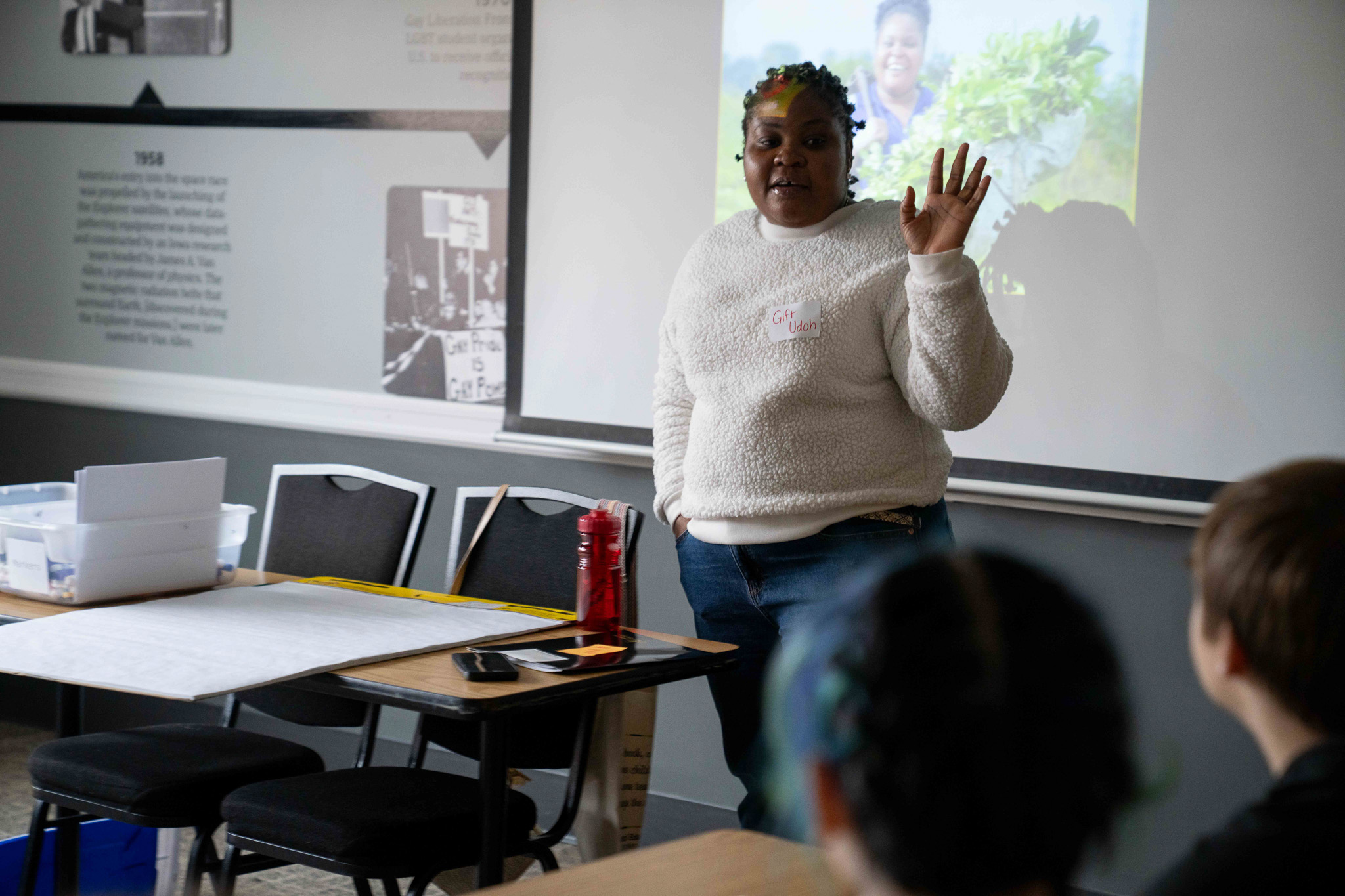
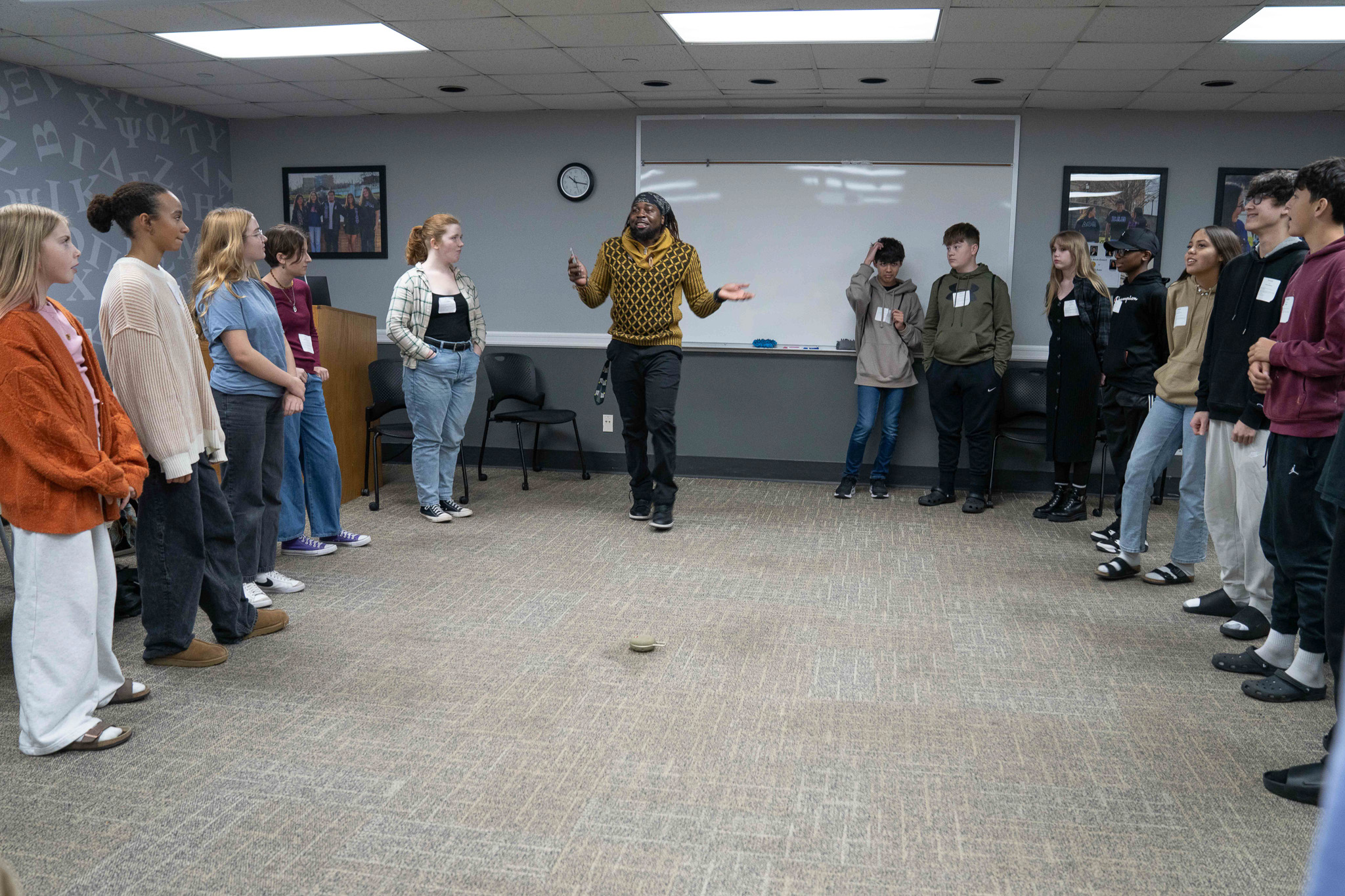
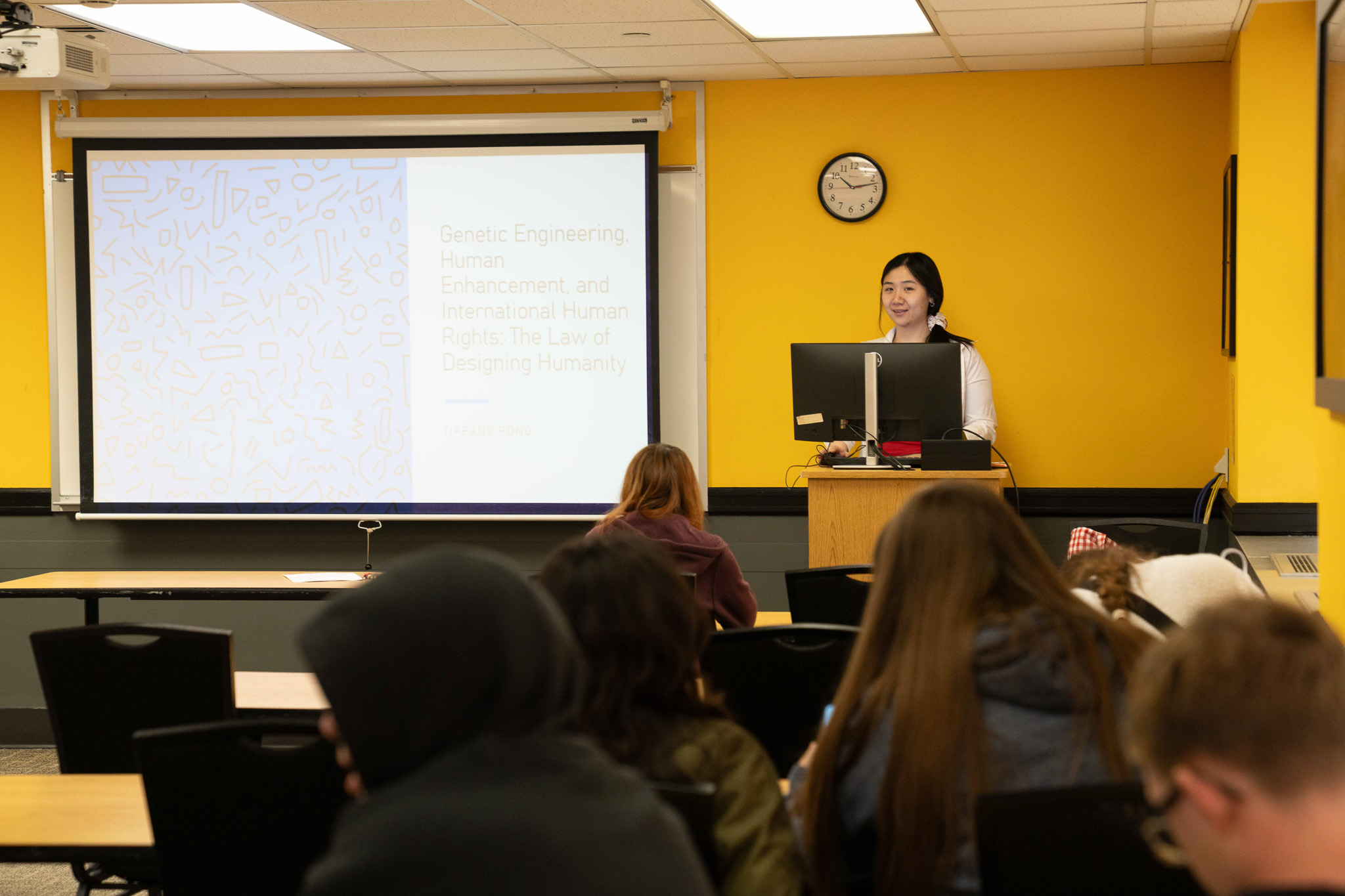
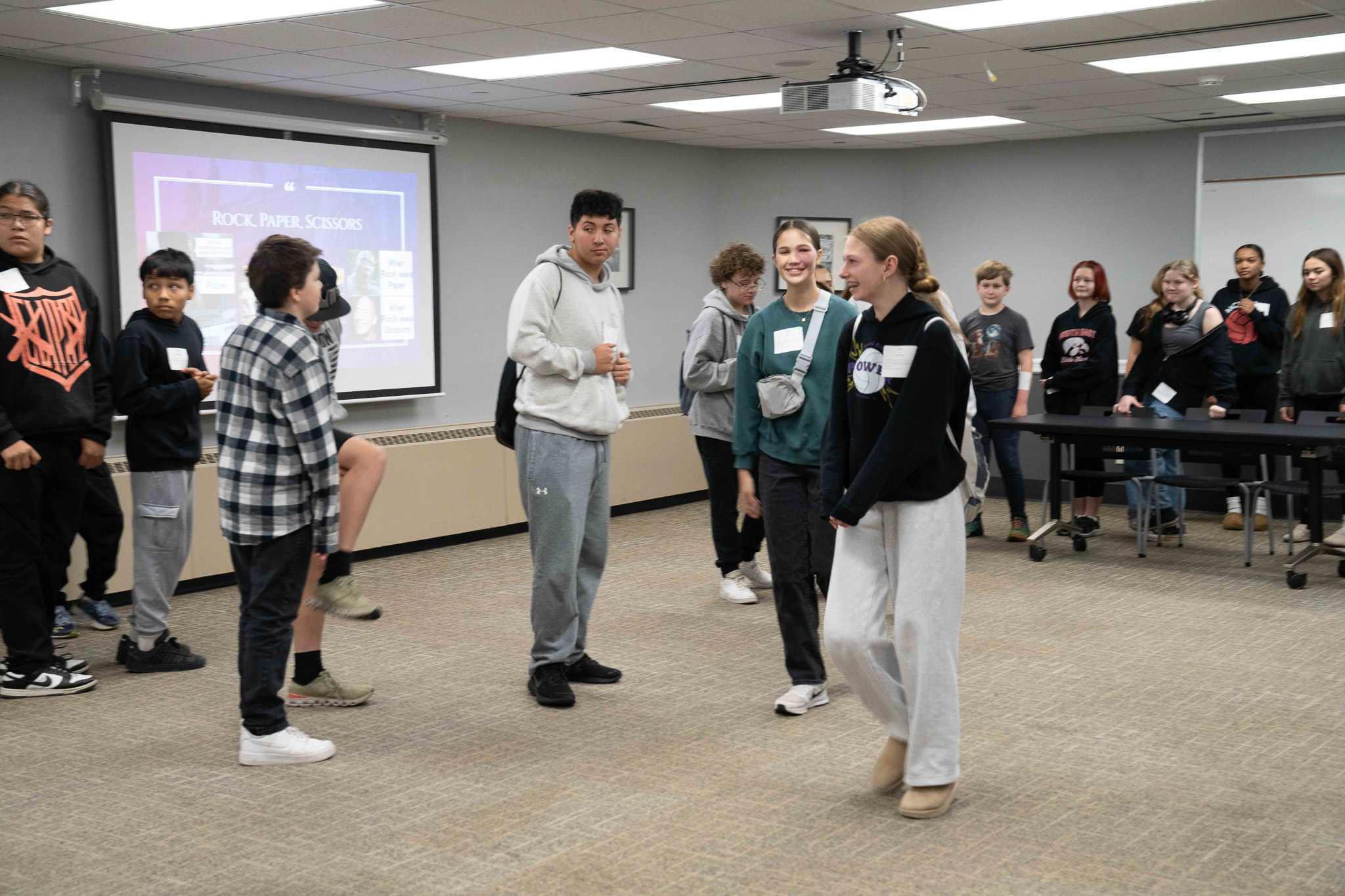
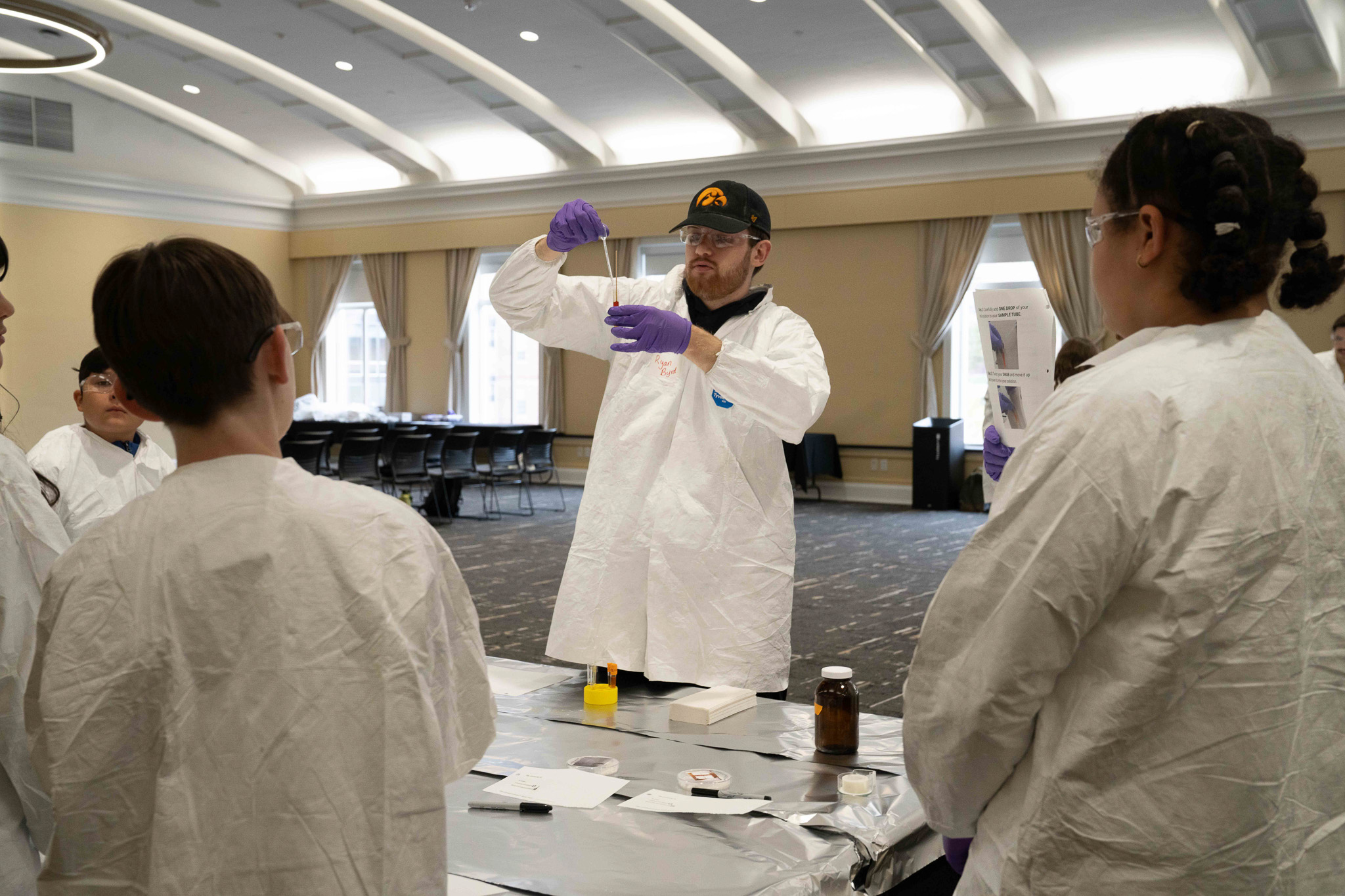
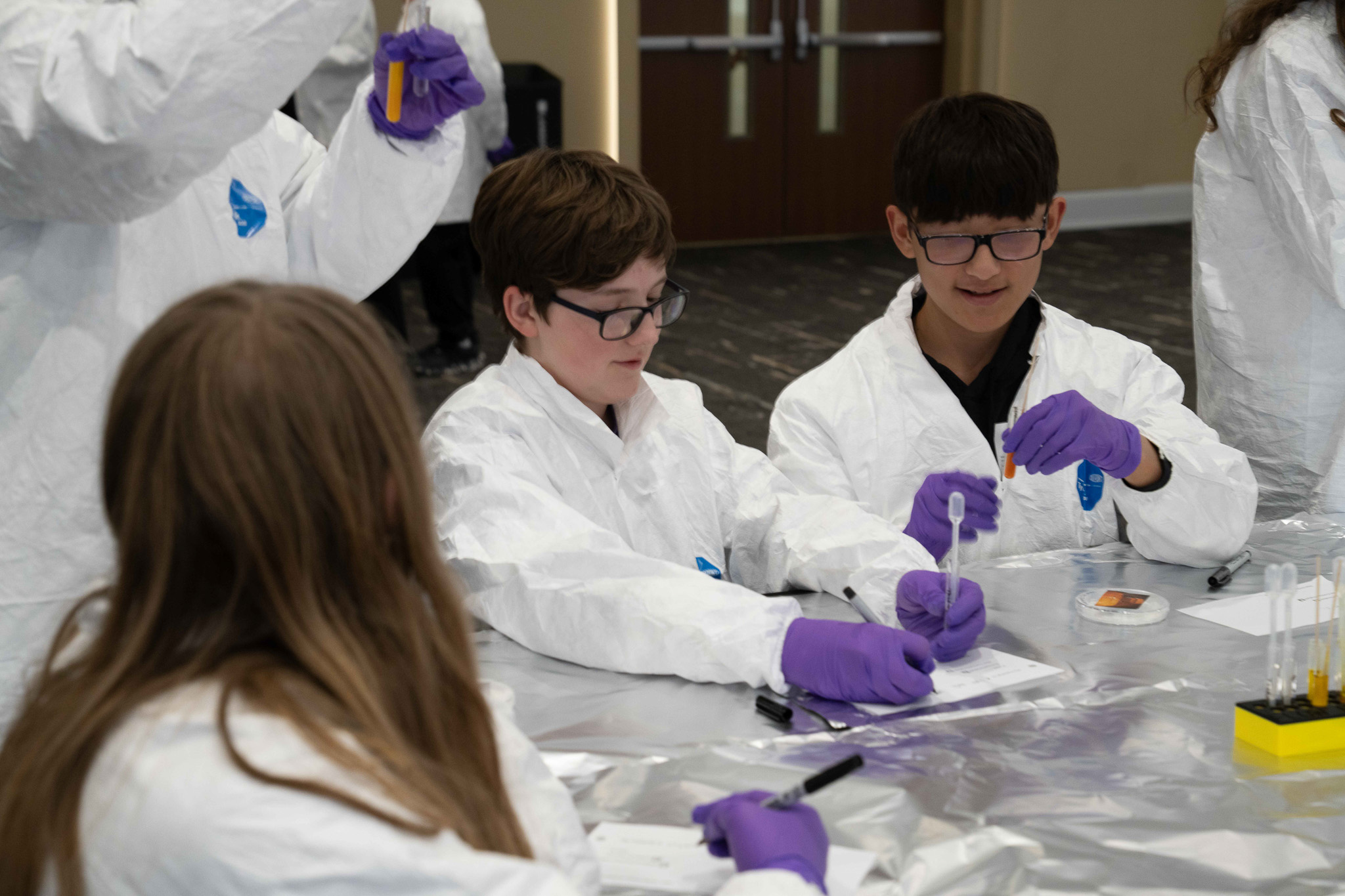
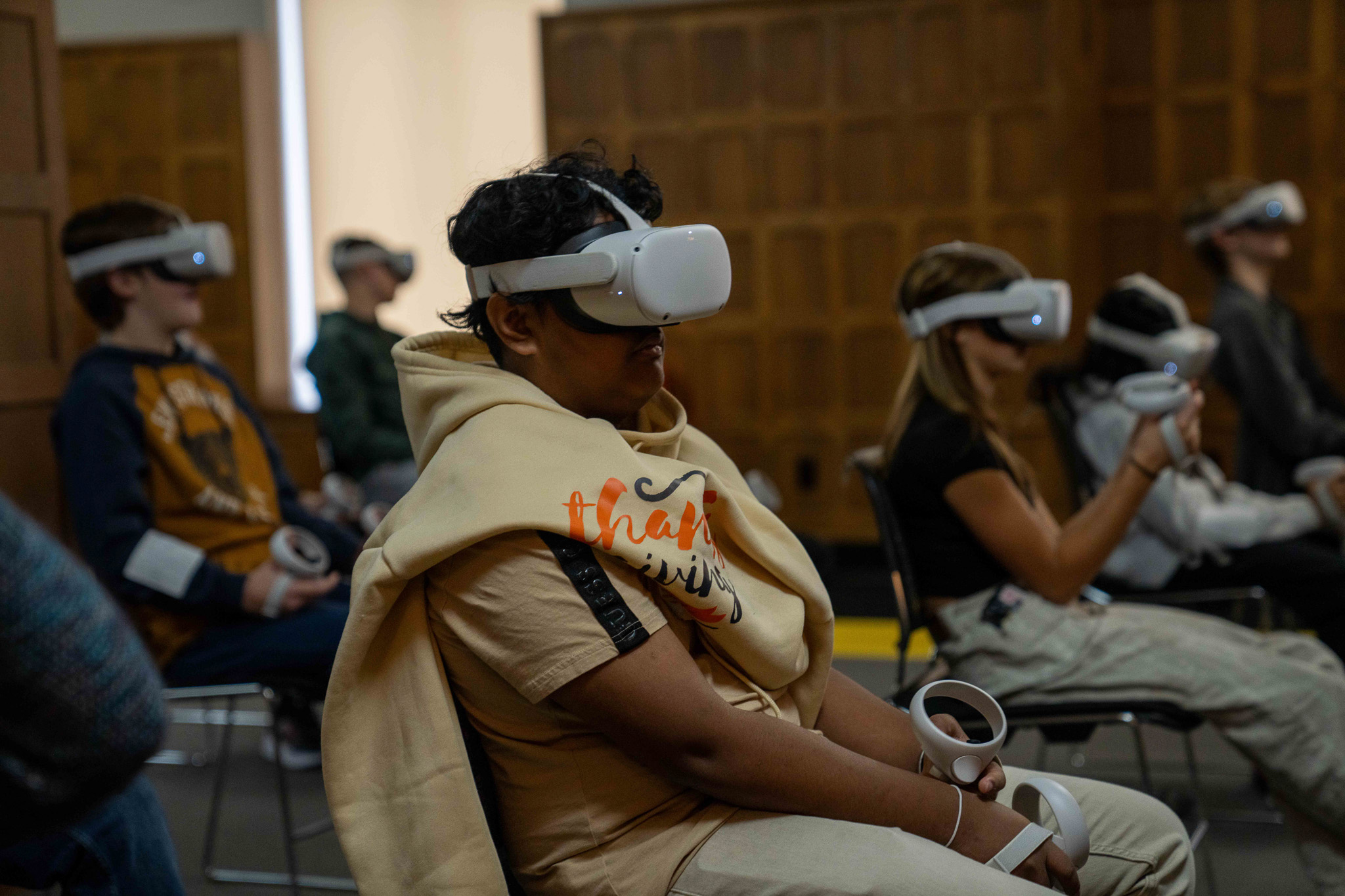
Since 1997, International Day has provided Iowa students with a hands-on introduction to human rights and the United Nations Sustainable Development Goals (SDGs). The 2025 event featured breakout sessions led by University of Iowa faculty, staff, and community partners on topics ranging from access to clean water and environmental health to cultural identity, disability rights, and the power of art as activism.
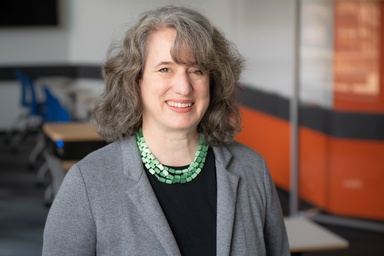
College of Education Associate Dean for Faculty and Graduate Education Pam Wesely encouraged students to view the day as a time to reflect on their current impact.
“You are living your life right now – you’re not living for the future,” Wesely tells the audience. “Who you are right now is really important. Think about who you are as you sit through today’s sessions.”
Wesely also credited the large team of university and community collaborators who made the event possible, emphasizing how partnerships between educators and human rights advocates help spark curiosity and compassion in young learners.
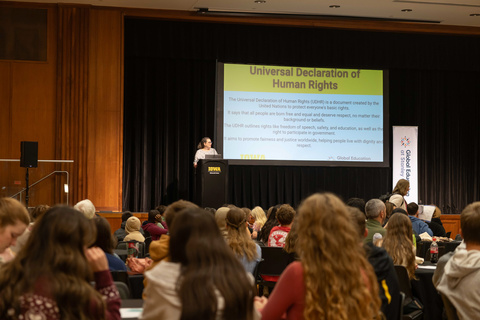
Krista Regennitter, program officer for global education at the Stanley Center for Peace and Security, framed the day within the larger context of international cooperation.
“This program has been going on since 1997 – 29 years,” she says. “The goal is to engage students with local and global issues around human rights and the sustainable development goals.”
Regennitter explains how the Universal Declaration of Human Rights, adopted in 1945, and the United Nations’ Sustainable Development Goals, established in 2015, set global standards that every nation – including the United States – must strive toward.
“Our keynote presenter is focusing on Goal 3: Good Health and Well-Being,” she says, “but the Sustainable Development Goals collectively are about ending poverty, protecting the planet, ensuring health, and promoting peace and equity for all.”
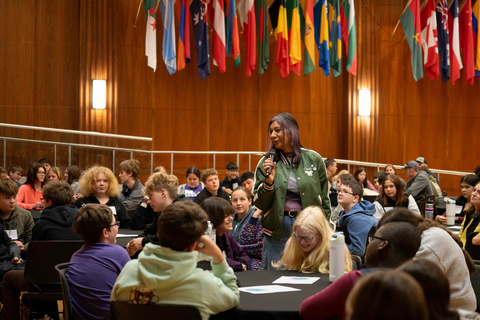
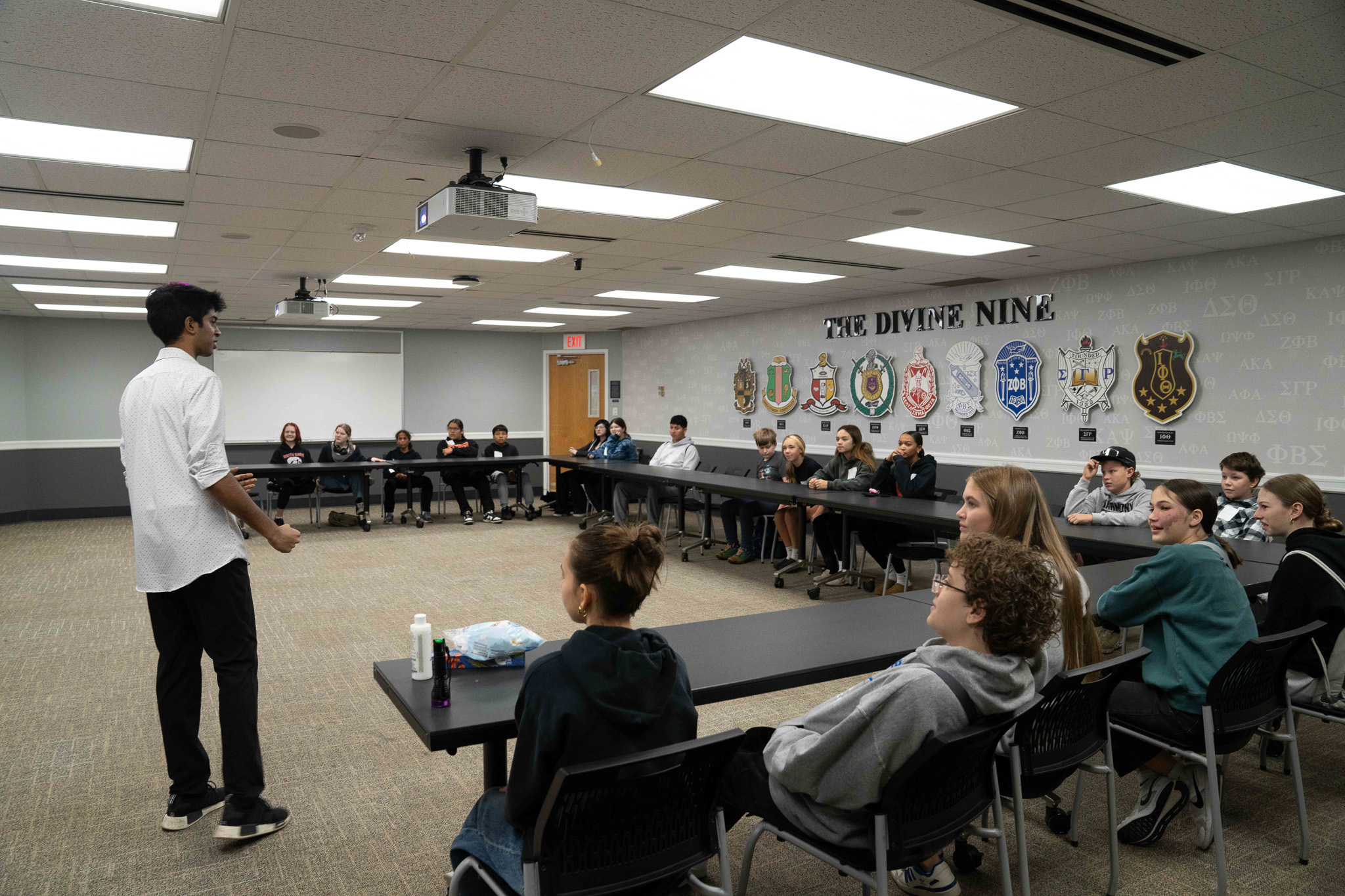
Keynote speaker UI Assistant Vice President for Student Life Maria Guadalupe Bruno, a licensed psychologist and founder of Zen Mar Wellness, used a memorable metaphor to explore how connection supports mental health.
“We’re talking about how belonging helps us feel connected and how it relates to good health and well-being,” Bruno says. “It’s not just about eating your vegetables or working out – it’s about creating spaces where you belong.”
Bruno invited students to think about their “belonging signal,” comparing emotional connection to Wi-Fi bars.
“Whenever we feel supported, noticed, and valued, that creates safety and comfort,” she tells the crowd. “When we feel like we belong, our mental health stays strong. You all matter, you all belong, and your signal deserves to be strong.”
Her interactive presentation – complete with questions, laughter, and even candy bars for participation – encouraged students to recognize their power to build community within their own classrooms and friend groups.
For teachers like UI alumna Kori Schlawin of Susan Clark Junior High in Muscatine, International Day offers transformative learning opportunities.
“It’s really important to bring students here,” Schlawin says. “It gives our students opportunities they wouldn’t have if we didn’t come. I just hope they take away some new ideas – something they hadn’t thought about before.”
That sense of discovery, organizers say, is what has kept the event thriving for nearly three decades.
As the day concluded, students returned to their debrief sessions by school to share what they had learned – from accessibility and environmental health to belonging and justice. Through these reflections, organizers hope each student left understanding that their voices matter and their everyday choices can promote human rights in their communities.
“International Day is about helping young people see their connection to the wider world,” Regennitter says. “When students realize that global issues are also local ones, they start to see themselves as part of something much bigger.”