
Overview
Are your career goals centered on helping, supporting, learning, or providing instruction in a variety of spaces and occupational fields? Are you ready to explore alternative learning spaces, make a difference in mental health, champion diversity, or innovate with educational technology? Dive into your future with UI’s dynamic Education Studies and Human Relations (ESHR) major!
Program Overview
Build critical thinking and interpersonal communication skills to work in areas such as higher education, nonprofit organizations, companies that develop training, learning technology companies, health care settings, community organizations, school district support roles, and informal learning spaces such as nature environments, maker spaces, museums, and athletic teams.
Built with flexibility in mind, this multidisciplinary major embraces the notion that learning and helping professions are not limited to traditional classrooms. ESHR is the perfect major for those wanting to create change on an individual or systemic level.
The 30 required credits include 15 core course credits and 15 elective credits.
Informal concentration areas help you tailor your experience based on career goals and interests.
Informal Concentration Areas (ICA)
ESHR provides a number of Informal Concentration Areas (ICAs). ICAs are meant to be fluid over time to best reflect trends and issues in the field of education and helping professions. In addition, students may create their own concentration focus that will meet their own career trajectory. Download a printable ICA listing.
Cognition, Learning, and Development
Courses in the Cognition, Learning and Development ICA will help you understand the process of learning and helping and how to engage with different populations in their development of knowledge, skills, and abilities.
Industry Jobs (with BA): Public health, private educational settings, non-profit leadership, nonteaching careers such as leadership programs, academic administrators, corporate training, curriculum and textbook development.
Higher Education (with Masters, PhD, JD): Counselor Education, Counseling Psychology, School Psychology, Ed Leadership and Policy, Learning Sciences, or Psychological and Quantitative Foundations.
Couple and Family
Understand the nature of interpersonal and intimate relationships, the inner workings of family systems, individual and family development, how the family fits into larger society, how to help families under stress or in crisis, how to be an advocate for all families.
Industry Jobs (with BA): Social service programs, childcare centers, pre-school programs, 4-H and youth development programs, mental health and substance abuse centers, child and domestic abuse centers and runaway shelters, family policy analyst/advocate, assisted living, adult day services, and nursing homes.
Higher Education (with Masters, PhD, JD): Human development and family studies, child life, social work, couple and family therapy.
Experiential Informal Learning
Build skills to design instruction and support learners in informal learning spaces such as the outdoors, maker spaces, museums, studios, before- and after-school programs, camps, or clubs.
Industry Jobs (with BA): State parks and interpretive centers, community centers, youth leadership programs, museums, makerspaces, recreation services, athletic organizations, and summer camps.
Higher Education (with Masters, PhD, JD): Learning sciences, educational psychology, museum studies, and informal education.
Consider the Undergrad to Grad opportunity!
ESHR to Learning Sciences & Educational Psych.
K-12 Student Interventions
Understand the needs that children have as they cope with trauma, loss, family concerns, and common developmental challenges.
Industry Jobs (with BA): Public school para, after school programs, family social service programs, childcare centers, pre-school programs, 4-H and youth centers, mental health and substance abuse centers, child and domestic abuse centers, family policy advocate, at risk student intervention.
Higher Education (with Masters, PhD, JD): School counseling, human development and family studies, child psychology, and community agency work.
Learning, Design, and Media
Understand how people learn and use that understanding to design, implement, and evaluate formal and informal learning environments, using an iterative process.
Industry Jobs (with BA): Technology, educational testing, and learning companies, K-12 and higher education, healthcare, business, and not-for-profit organizations, learning and education director, learning strategist, field coach, instructional designer, learning solutions designer, and museum exhibit designer.
Higher Education (with Masters, PhD, JD): Learning sciences, instructional design, educational psychology program, human factors.
Consider the Undergrad to Grad opportunity!
ESHR to Learning Sciences & Educational Psych
Sports, Society, and Inclusion
Understand the social and political elements that shape participation in sport and exclusion from it. Train students to become advocates for equity and inclusion in sports and vocation connected to it.
Industry Jobs (with BA): Athletic coaching, non-profits, and consulting.
Higher Education (with Masters, PhD, JD): Higher education, counseling, and law school.
Supporting College Students
Understand how to work with college students and related systems. College and universities of all sizes and varied purposes are fueled by well-trained professionals and policies that support their students and mission.
Industry Jobs (with BA): Admissions counselor, academic coach, residence hall coordinator, multicultural specialist, financial aid officer, TRIO programs specialist.
Higher Education (with Masters, PhD, JD): Higher education and student affairs (HESA), college student personnel, counseling, and educational policy programs.
Trauma Informed Advocacy
Understand the challenges that individuals who have experienced trauma may face, learn how to advocate and support people who have had these challenging experiences and promote their success.
Industry Jobs (with BA): Child protective services, family social service programs, foster care case management, mental health and substance abuse centers, child and domestic abuse centers and runaway shelters, and victim rights advocacy.
Higher Education (with Masters, PhD, JD): Community and behavioral health, child life specialist, social work, couple and family therapy, mental health counseling, public policy, and psychology program(s).
Iowa Law 3 + 3
The ESHR program is also a partner with the College of Law for Iowa Law’s 3 + 3 program. This program allows eligible undergraduates to apply to law school in their junior year. Students admitted under the program fulfill their senior year of undergraduate credits through the successful completion of their first year law school courses, allowing them to graduate with both a bachelor’s and law degree in just six years, saving a year of tuition and related costs.
Please contact sarah-showalter@uiowa.edu for more information.
Subprograms
You can choose between two subprograms to help meet your educational and career goals. You can also opt to not pick a subprogram and take a variety of interesting courses across different disciplines.
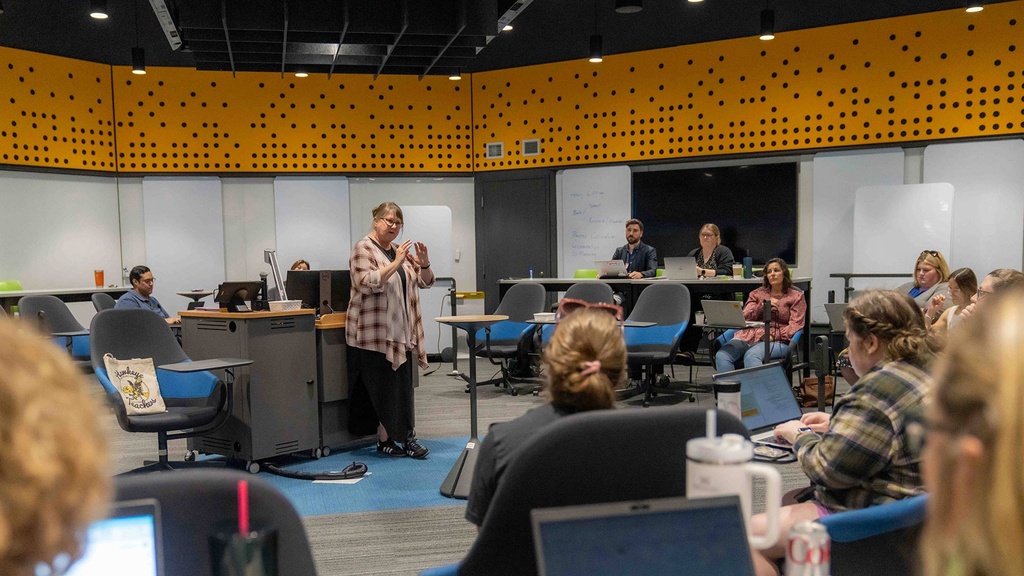
Education Studies
The Education Studies subprogram is for students interested in pursuing careers in learning technologies, school district support roles, education policy, assessment and evaluation, among other options.
It also prepares students for future graduate study in educational measurement, learning sciences, educational psychology, higher education and student affairs, and other related areas.
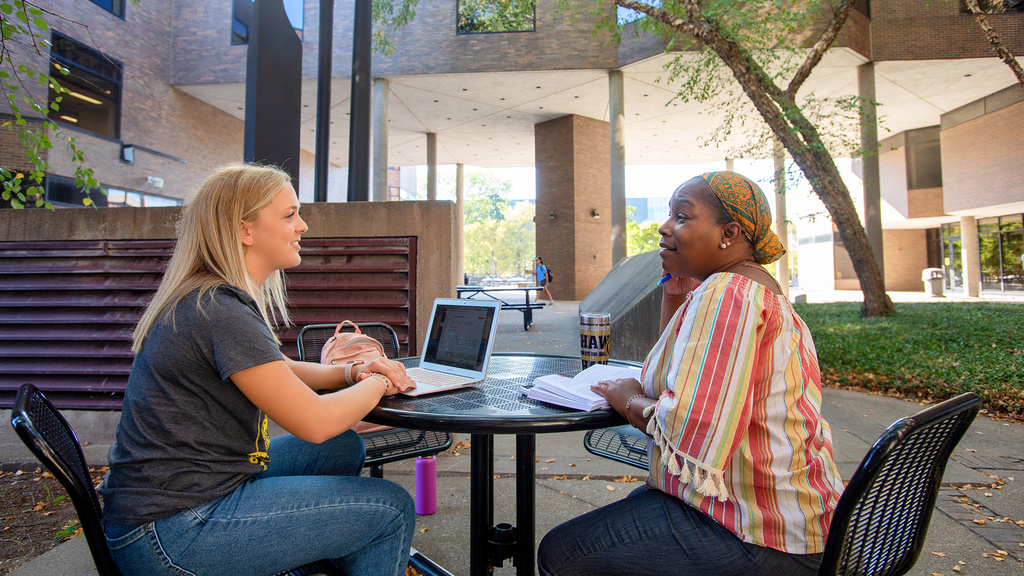
Human Relations
The Human Relations subprogram is for students interested in careers in helping fields that rely on interpersonal communication and personal problem solving.
It also prepares students for future graduate study in professional counseling, health-service psychology, couple and family therapy, community relationship, and related fields.
Faculty
The ESHR faculty represent every program in the College of Education and have expertise in learning, teaching, measurement, counseling and helping professions, and the social, historical, and policy foundations of education. Learning from faculty across the college will help you to tailor your learning to your interests and career goals.
To see the Curriculum Advisory Committee, please visit: Committee Listing.
Admissions and Application
For additional information about the admission and application process, please visit the university's Education Studies and Human Relations.
Admission Requirements
First-year undergraduate applicants to the Bachelor of Arts major in Education Studies and Human Relations must meet the admission requirements of the College of Education (the same as those required for the College of Liberal Arts and Sciences).
Transfer undergraduate applicants to the Bachelor of Arts major in Education Studies and Human Relations must meet the transfer admission requirements of the College of Education (same as the transfer admission requirements of the College of Liberal Arts and Sciences).
Current University of Iowa undergraduate students may complete the Change of College Application to change or add the Education Studies and Human Relations major. See the steps below:
- Log into MyUI.
- Navigate to the Advising section.
- Select “Change of College Application.”
- Select the college/program you are applying to from the drop-down menu.
- Select the session you would like the change to become effective.
- Provide answers to the supplemental questions.
- Submit the application.
Current undergraduate students who are ineligible to register for courses in their current college or who have been dismissed from another college at the University of Iowa are not admitted to the College of Education.
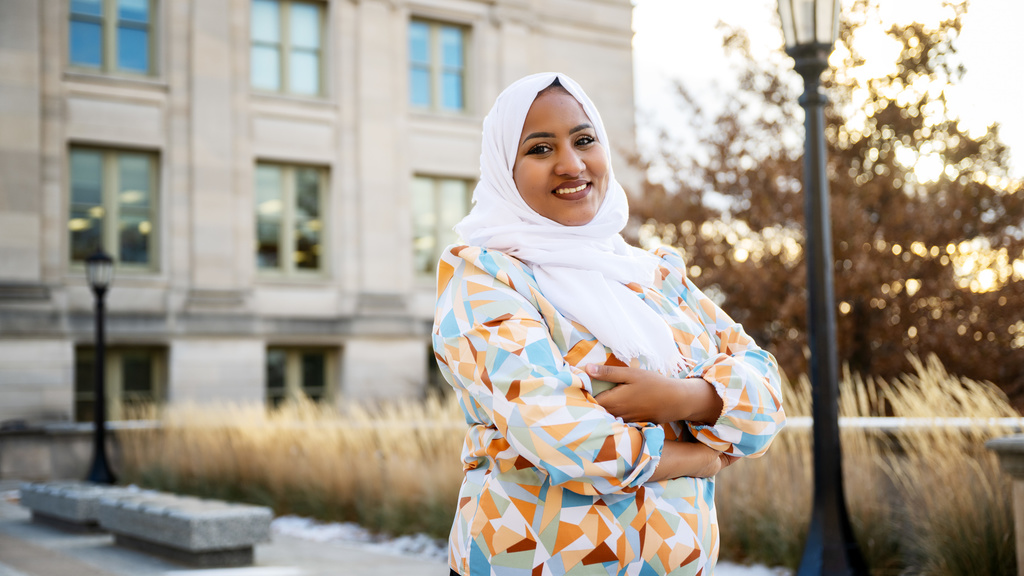
Create your own path
Malaz Aliomer has created her own path through new experiences and conquered challenges. Now, the University of Iowa student is following her passion for working with children and achieving her goal of earning a degree from the College of Education.
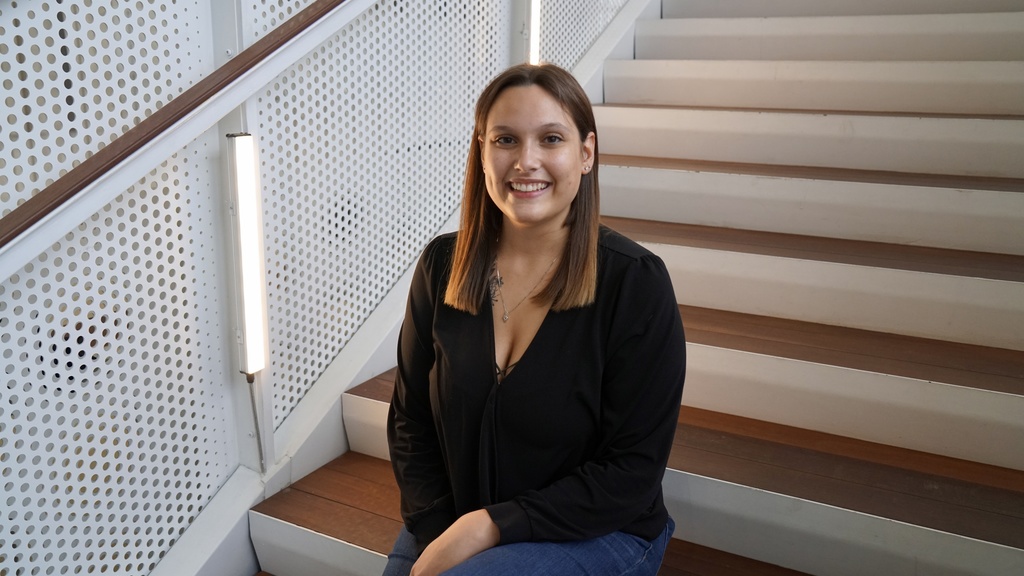
Student Success
Nicole Williams, an Education Studies and Human Relations and organ performance double major, has created a new app to provide all students with access to music education.
Alumni Inspiration
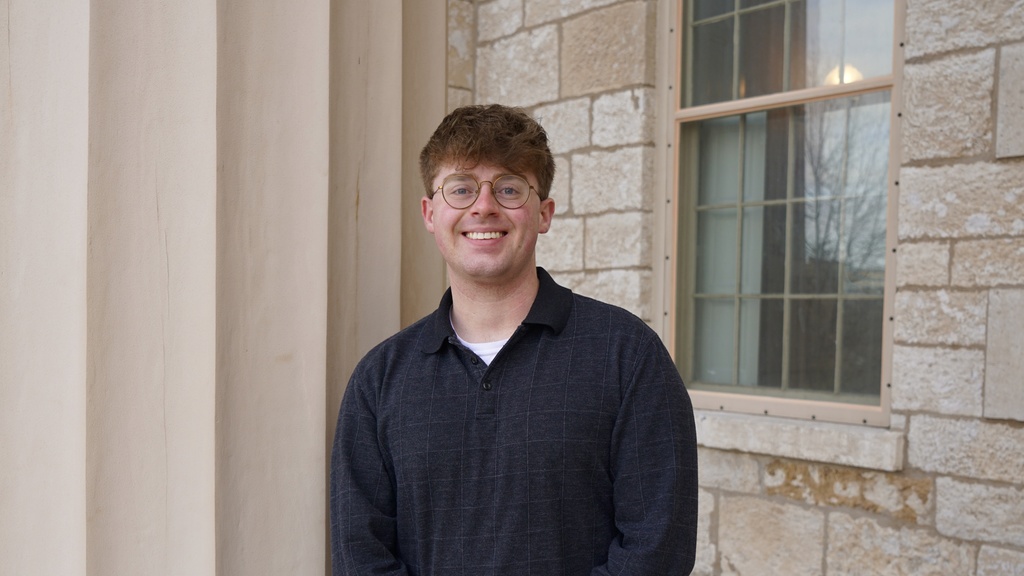
Tucker Chorpening focused on addressing the systemic oppression that occurs at higher education institutions when choices are made that do not create an equitable and accessible learning environment on campuses.
News

Veteran, ESHR major shares unique educational journey
After traveling more than 2,000 miles from his hometown of San Juan, Puerto Rico and two decades of serving in the military, family connections guided Hochi Rosario Cuevas to Iowa, where he's graduating with his Bachelor of Arts in Education Studies and Human Relations and serving as the student commencement speaker.

Schuh wins Hancher-Finkbine award
Professor Kathy Schuh, director of the Education Studies and Human Relations major, was recently presented with UI's Hancher-Finkbine award.

Soria finds her path to helping profession through ESHR major
As a first-generation Latina student, Jessica Soria found her professional path through the Education Studies and Human Relations major. She is also the featured student speaker at the College of Education Undergraduate Commencement and Teacher Education Program Recognition Ceremony.
Program Resources
Courses and Policies
Introduction
If you have career goals in education or a helping profession but do not wish to pursue classroom teaching, ESHR may be right for you! The University of Iowa’s College of Education offers an undergraduate Bachelor of Arts with a major in Education Studies and Human Relations. The following information will provide you a snapshot of the major.
ESHR . . .
- Is a multidisciplinary major in education.
- Furthers career goals or prepares you for future graduate study in areas of education and helping professions.
- Enhances your broad liberal arts and sciences education.
- Develops strong academic preparation including skills in critical thinking and interpersonal communication.
- Includes courses from across the four academic departments in the UI College of Education.
- Includes two subprograms along with the broader ESHR major.
- Includes multiple informal concentration areas to help you select courses.
Nuts and Bolts . . .
- 30 credits in major (minimum; 27 must be unique to the major)
- CLAS gen eds required
- Expand on ESHR with additional concentration areas, a minor, or a dual major.
- Check Enrollment and Policies for the requirements for double majors (including ESHR with TEP), transferring from the HR minor, or combining the ESHR major with the HR or EP minors.
- 120 total credits for BA
- Requires cumulative UI GPA is ≥ 2.5 and at least 12 credits earned for admission for current UI students
- To declare the major, complete the "change colleges" process
- Advising assistance: Sarah Showalter (sarah-showlater@uiowa.edu)
- Program assistance: Duhita Mahatmya (duhita-mahatmya@uiowa.edu)
How to choose your ESHR courses:
- Choose between ESHR (full curriculum), Education Studies subprogram (ES), or Human Relations subprogram (HR).
- Education Studies subprogram - preparation for careers in learning technologies, school district support roles, education policy, assessment and evaluation, education programming and management, organizational learning, and competitive preparation for future graduate study in educational measurement, education policy, learning sciences, educational psychology, higher education, student affairs, and related fields.
- Human Relations subprogram – preparation for careers in helping fields that rely on interpersonal communication and personal problem solving (e.g., addiction, case management) and competitive preparation for future graduate study in professional counseling, health-service psychology, couple and family therapy, community leadership, and related fields.
- If you wish, select an informal concentration area within a subprogram to help you build a cohesive program of study or create a concentration area of your own by choosing courses that fit your career goals. Choose these courses in consultation with an advisor.
Enrollment and Policies
Making ESHR work with another major or minor
ESHR requires only 30 credits in the major, so it’s easily paired with one of the minors offered through the College of Education (Educational Psychology or Human Relations) or a major or minor from the College of Liberal Arts and Sciences. Through this process, you can build on ESHR to meet your academic and career goals. Just remember,
- At most, three credits may be counted towards both majors, or the major and minor unless otherwise specified (i.e., see ESHR and TEP).
- The ESHR major must include at least 27 unique course credits not counted elsewhere unless otherwise specified (i.e., see ESHR and TEP).
- No general education credits can be double counted in the ESHR major. Here are the gen ed requirements: http://catalog.registrar.uiowa.edu/liberal-arts-sciences/general-education-program/
ESHR major with Educational Psychology (EP) or Human Relations (HR) minor
- The EP minor and the HR minor each include 15 s.h. of course work (check the University Catalog for specifics and requirements).
- One course from the major and the minor may be double counted.
- That means, a minor must include at least 12 credits that are not also counted towards the major.
- Doing the math – if you want the ESHR major plus an HR or EP minor, you will complete 42 unique credits (30 for ESHR, 15 for the minor, less 3 credits allowed to be double counted).
ESHR and Teacher Education Program Double Major
- You may double count the following courses if pursing a double major with ESHR and TEP: PSQF:1075, EPLS:3000, and EPLS:4180.
- You may not double count any other courses that overlap between the two majors, thus allowing you to add competencies to your skill set.
Transferring from the Human Relations (or the Educational Psychology minor) to the ESHR Major
- While the HR minor is a great addition to any major, a double major may better position you for graduate school, in particular, if you are interested in a helping profession. The ESHR major is designed to make that transition from the HR minor to the ESHR major straightforward.
- Any courses that you have taken towards the HR minor will be used to meet ESHR required or elective course requirements. These courses cannot be used to replace required courses with different course numbers.
- Your advisor will have to place these accepted classes into your program of student on an individual basis.
- The HR minor will be removed from your program of study when you enroll in the ESHR major.
- If you want to have an ESHR major plus an HR (or EP minor), you will complete 42 unique credits (see above).
Contact Us
General inquiries can be addressed to coe-eshr@uiowa.edu.
Current students interested in changing majors or adding the ESHR major should contact Sarah Showalter, academic advisor.